
Where should a porta potty go on a Seattle jobsite?
Pick flat, firm ground away from foot traffic bottlenecks, storm drains and low spots that pool water during Seattle's wetter months. This city sees rain of 0.10 inch or more on about 91 days a year, the highest total in our five-city comparison, so drainage matters more here than it does in a drier market. Keep units within reach of your crew but out of the path service trucks use for pumping, since a truck needs clear backup access to reach the tank valve, a detail covered in how do porta potties work. If you're placing near a public sidewalk or curb, check porta potty permit requirements first, because Seattle treats the right-of-way differently than private lots. For jobsites still figuring out counts, start with how many porta potties do I need before you finalize spots, then confirm sizing against standard porta potty rental specs so the unit you order actually fits the pad you've picked.
Does Seattle require a permit for porta potty placement in the right-of-way?
Seattle's Street Use permit rules clearly name storage containers and residential dumpsters placed in the public right-of-way, requiring approval from the Seattle Department of Transportation before delivery under Seattle Municipal Code 15.04.010. Whether a portable toilet specifically falls under that same named permit type or the broader SMC 15.04.010 prohibition on using public space without a permit was not confirmed in SDOT's published categories, so we're not going to guess a fee or a form number here. If you're placing on private property, driveway or a job lot, none of that applies and you can move straight to porta potty rental checklist for setup steps, whether the job is a home renovation porta potty or a full construction site services package. If you do need the street, budget a dumpster placement permit cost the same way SDOT structures its container permits, based on the ROW Management - Simple Review base fee plus location and duration add-ons, and confirm current numbers directly with the department. Containers must sit at least 30 feet from intersections, 10 feet from driveways and 15 feet from fire hydrants under the same placement rules, and the same clearances are worth reviewing on dumpster permit requirements before you book a 10 yard dumpster rental or larger.
What clearance does a dumpster or storage container need nearby?
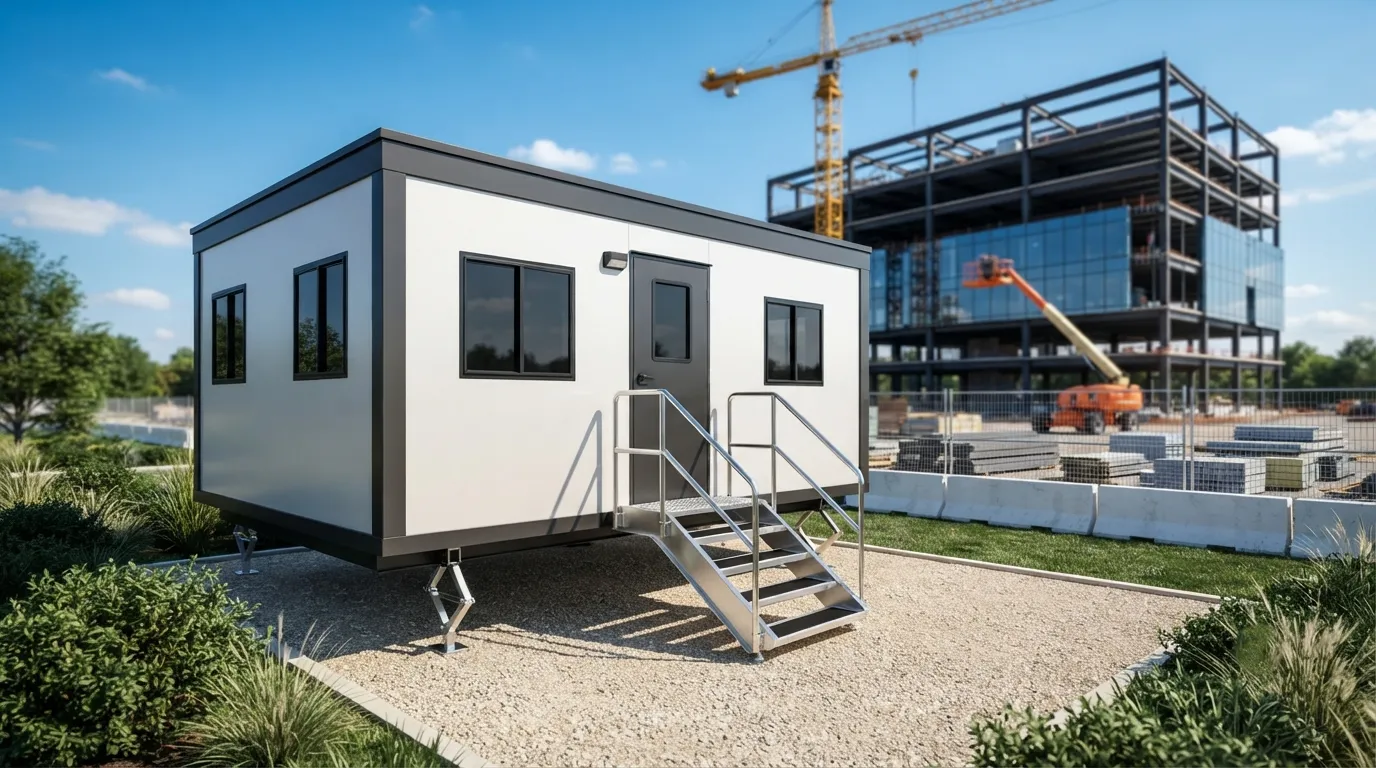
A roll-off delivery needs about 60 feet of straight clearance behind the truck, which is the number that trips up tight urban lots more than any permit rule does. Plan that clearance before you commit to a spot for roll-off dumpster rental or a storage container rental, because moving a dumpster after drop-off costs more than getting the spot right the first time. If you're renting a mobile office trailer rental alongside a container, check the door swing on-site too; a jammed or bent door on an older unit is a common complaint, and mobile office trailer replacement doors are something worth asking about before you sign. Dumpster placement permit questions follow the same SMC 15.04.010 logic as containers: legal parking lane, free-standing, and clear of the same intersection, driveway and hydrant distances listed above. For yard-specific footprints, dumpster sizes and dimensions breaks down what fits where, and dumpster weight limits is worth a look before you load it.
How does placement change for accessible units, trailers or septic service?
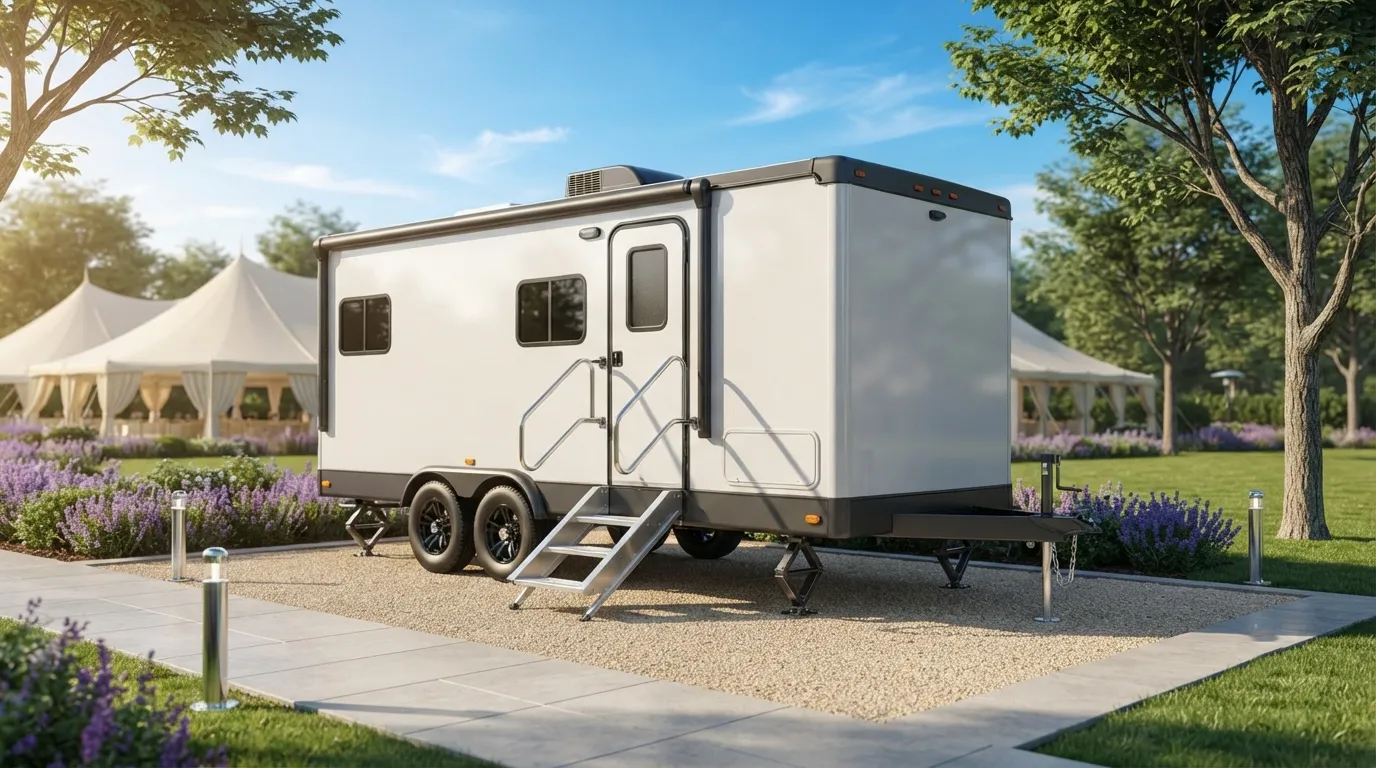
ADA-designated units need more room than a standard toilet. ADA Standards section 304.3.1 calls for a 60 inch turning circle, and section 403.5.1 sets a 36 inch minimum clear route to reach it, so pick a pad wider than you'd use for a standard unit under ADA accessible porta potty. Ramp approaches follow section 405.2, capping running slope at 1:12, which matters on Seattle's sloped lots more than on flat ground, and the full requirements are laid out in ADA restroom requirements. For restroom trailer rental placement, treat it like the dumpster clearance rule: give the delivery truck a straight, obstruction-free approach, and check hookups before the trailer arrives, since a 4 stall restroom trailer draws more water and power than a single unit. Septic and holding tank service needs its own access path too, whether you're placing a holding tank rental on-site or scheduling a septic tank pumping cost check ahead of time. A residential septic tank is typically pumped every 3 to 5 years depending on tank size and household use, and whether you're coordinating a septic pumping service in Seattle or a placercille septic pumping service on a job out of town, the pump truck needs the same kind of clear line the dumpster truck does. If you're running a construction crew, pair your restroom count with OSHA portable toilet requirements and a handwashing station rental, or a portable sink rental if the site needs a freestanding unit; if your crew handles paints, coatings or pesticides, OSHA 1926.51(f)(1) requires washing facilities for that work specifically. General toilet counts on construction sites follow OSHA 1926.51(c)(1): one facility for 20 workers or fewer, scaling up from there.
Can I place a porta potty on a public sidewalk in Seattle?
Not without checking first. Seattle's named Street Use permits cover storage containers and dumpsters in the right-of-way under SDOT review, but no SDOT page confirms a distinct permit category for portable toilets specifically. Treat sidewalk placement as needing confirmation with the city before delivery, and if timing is tight, an emergency porta potty rental provider can help you sort placement fast.
What ground surface does a porta potty need?
Level, firm and stable. ADA Standards section 302.1 requires stable, firm, slip-resistant surfaces for accessible routes, and that same standard is a good baseline for any unit, accessible or not, since a tilted unit is a service and safety problem either way.
How far should a porta potty sit from a building entrance?
Close enough for convenience, far enough that service trucks can reach it without blocking doors. There's no fixed distance in code for standard units, so plan around your site's actual traffic flow and the truck access you'll need for weekly service.
Do handwashing stations need to sit next to the toilets?
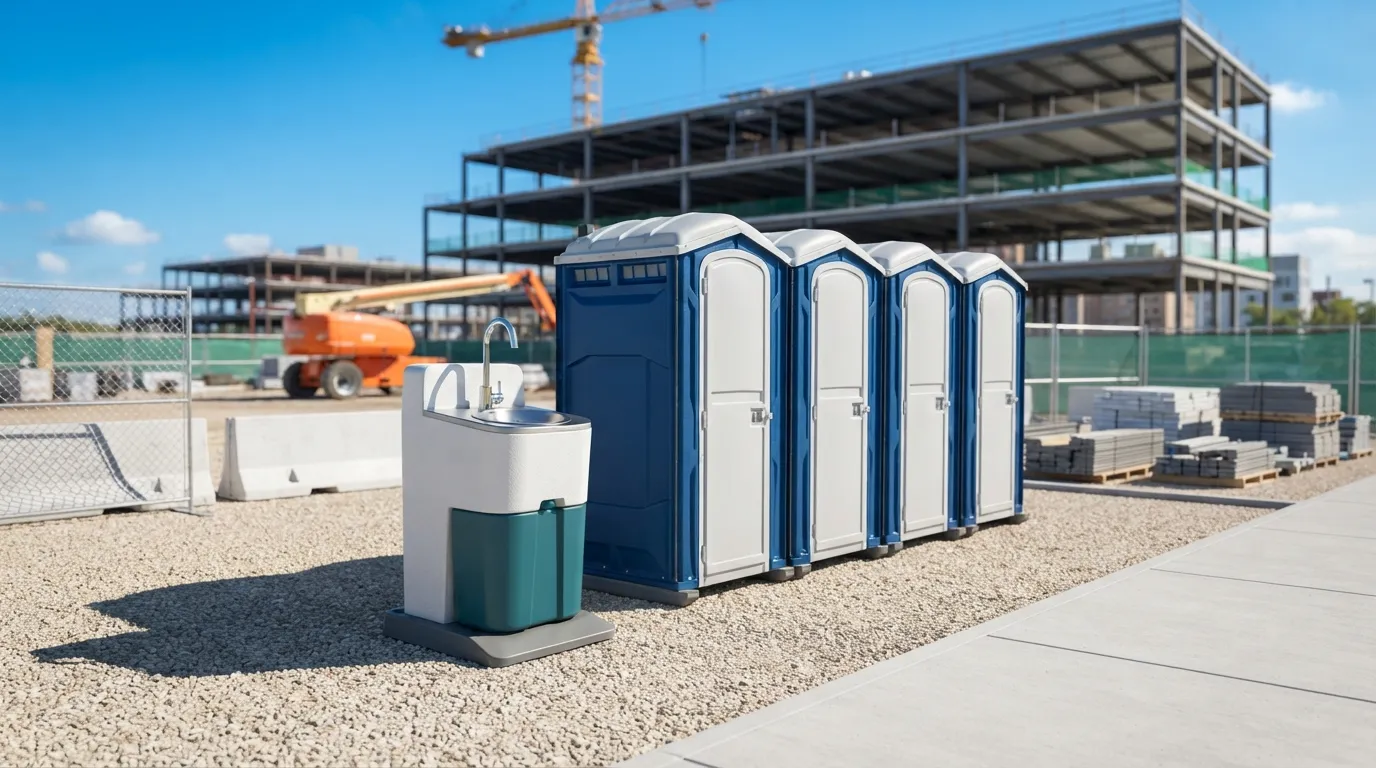
Not by rule, but it's the practical choice. 29 CFR 1910.141(d)(2) requires soap and towels or a hand-drying device at washing facilities, and keeping that station near the toilet bank keeps crews actually using it.
What about replacement parts for portable sink units on long rentals?
Ozark river portable sink replacement parts come up on longer rentals when a pump or spout wears out. Ask your provider before the rental starts whether parts and swaps are handled as part of service, since it saves a delay mid-job.
Next step
Get a delivery date
Tell us the address, the dates and the headcount. We size the order and confirm the route.