
What does OSHA actually require for handwashing?
OSHA 1926.51(f)(1) kicks in specifically where crews apply paints, coatings, herbicides or insecticides, or work around similar contaminants. It is not a blanket rule for every job site, so do not treat it that way. Separate from that, 29 CFR 1910.141(d)(2) sets the baseline for washing facilities generally: soap, plus towels or a hand-drying device. Hand sanitizer does not check that box on its own, no matter how much you stage. If your Seattle crew is also managing toilet counts, OSHA portable toilet requirements covers the ratios under 1926.51(c). Ag operations run a different rule: 1928.110 requires potable water, toilets and handwashing within a quarter mile walk of hand-labor employees, at one facility per 20 workers. If you are running crews on farmland near Sammamish, 21.3 miles east, or out toward Issaquah, that quarter-mile figure is the one inspectors check first. We stock handwashing station rental units built for exactly this, and pair them with portable sink rental setups when a job needs a fixed basin instead of a foot-pump tank.
How many handwashing stations does a Seattle job site need?
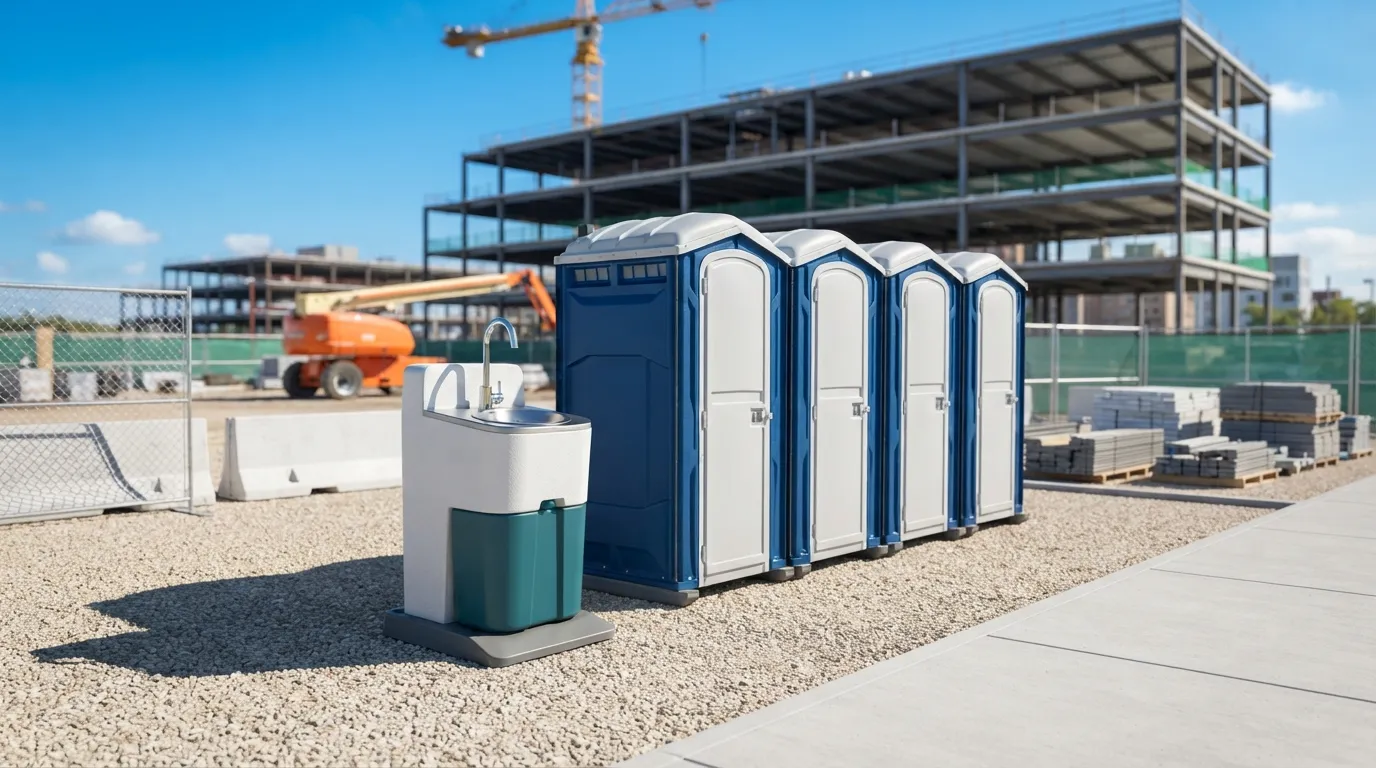
There is no fixed unit-per-worker count in the OSHA language itself, but the practical answer scales with crew size and how spread out the work is. A single station near the toilet bank covers a compact crew; a site stretched across a block, or one running multiple trades, usually needs stations at each work zone. Pair your handwashing count with your toilet count using how many porta potties do I need, since OSHA 1926.51(c) sets those ratios by headcount, and the two numbers should sit close together on-site. Seattle job sites downtown often place a station right next to each standard porta potty rental cluster so crews do not walk far between the two. If your project sits within the public right-of-way, remember placement itself may need a permit, not just the count. We can walk a porta potty placement guide alongside your handwashing layout so both pass the same site walk.
Do I need a permit for a handwashing station in Seattle?
Storage containers and residential dumpsters placed in Seattle's public right-of-way need a Street Use permit from the Seattle Department of Transportation before delivery, under SMC 15.04.010, which makes it unlawful to use any public place without one. SDOT's named permit product covers storage containers and dumpsters specifically; whether a standalone portable toilet or handwashing station counts under that same permit type was not confirmed in SDOT's published materials, so treat placement in the right-of-way as something to confirm with the city before drop-off, not something to assume is exempt. If your unit sits on private property, inside a fenced lot or behind a building line, this generally is not a concern. Full detail on where the line falls lives at porta potty permit requirements and dumpster permit requirements if your job also involves a roll-off. Seattle enforces this through SDOT's Simple Review base permit process, applied for through the Seattle Services Portal with a Right-of-Way Impact Plan attached. We handle placements across Seattle daily and can flag likely right-of-way situations before your delivery date, whether that is a downtown lot or a site near Mercer Island, 8.9 miles southeast.
Why do handwashing stations matter for a construction site?
Because inspectors check for them, and because crews using coatings or pesticides are the exact case OSHA 1926.51(f)(1) was written for. A citation costs more than a rental. Beyond compliance, a working station keeps a crew from tracking contaminants into trucks, break areas and eventually home. For sites also managing food service, grease trap pumping and handwashing often get scheduled on the same maintenance run, since both deal with contamination control. Renovation crews working inside occupied Seattle homes lean on home renovation porta potty setups paired with a compact handwash unit by the entry, keeping mess contained to one corner of the property. Larger builds sometimes add a portable sink rental near the break trailer instead of a foot-pump station, especially on multi-week jobs. Whichever setup fits, the standard applies the same way whether the site is in central Seattle or out toward Shoreline, 11.8 miles north.
Does hand sanitizer meet the requirement?
No. 29 CFR 1910.141(d)(2) calls for soap and towels or a hand-drying device, and sanitizer does not substitute for either. Seattle Porta Pros stocks stations with working soap dispensers and towel dispensers built in, not sanitizer-only units, so a site inspection does not turn into a scramble.
Do event sites need handwashing stations too?
Most vendors and permit offices expect them, even without a specific OSHA citation covering public events. Check event restroom rental or festival restroom rental for setups that already pair toilets and handwashing as one order.
Can I rent just one handwashing station?
Yes. Single units work for small crews, food trucks or short jobs. Larger sites usually add one per work zone rather than making everyone walk to a single station.
How often do stations need to be refilled or serviced?
Weekly service is a common baseline for portable sanitation generally, per ANSI/PSAI Z4.3 for units serving up to 10 users over a 40 hour week. Busier sites need more frequent visits.
What is the difference between a handwashing station and a portable sink?
A handwashing station is typically foot-pump operated with a small fresh and gray water tank. A portable sink rental unit often has a larger basin and is built for food service or higher-volume washing.
Next step
Get a delivery date
Tell us the address, the dates and the headcount. We size the order and confirm the route.