
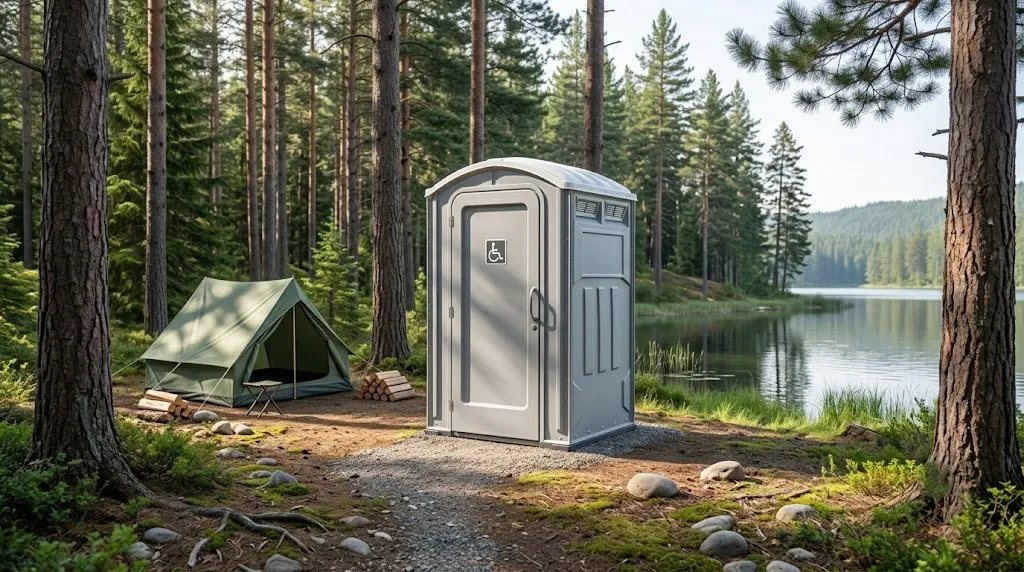
What size porta potty works best for camping?
For a family trip or a small group site, one standard porta potty rental covers you fine. It's the same footprint used on job sites and events: 44 by 48 inches on the ground, 92 inches tall, holding tank sized at 60 to 70 gallons. That's plenty for a weekend without needing a service visit mid-trip. If you're organizing a larger gathering, like a family reunion or a scout campout near Seattle, ANSI/PSAI Z4.3 sets the baseline service interval at once a week for up to 10 users over a 40 hour stretch, which tells you when a second unit or a mid-week pump-out starts making sense. Anyone asking about a small porta potty for camping usually just needs one standard unit and nowhere to walk it far from tents. If your group skews toward accessibility needs, look at an ADA accessible porta potty instead, built to ADA Standards section 304.3.1 for a 60 inch turning circle and section 404.2.3 for a 32 inch clear door opening. Pair either option with a portable sink rental or a full handwashing station rental so people aren't relying on hand sanitizer alone, since 29 CFR 1910.141(d)(2) is clear that sanitizer doesn't substitute for soap and running water. For a longer trip, check porta potty rental per day pricing against a weekly rate before you commit.
Do I need a permit for a porta potty at a campsite in Seattle?
If the unit sits on private property, like a backyard, a farm, or a private campground, you generally don't need a city permit. It's a different story if the unit ends up in the public right-of-way. Seattle Municipal Code 15.04.010 makes it unlawful to use any public place without a written permit from SDOT, and while SDOT's named Street Use permit specifically covers storage containers and residential dumpsters, no SDOT page confirms whether a portable toilet has its own listed category. That gap means placement in a Seattle street, alley, or curb lane needs a call to confirm before delivery, not a guess. For campsites on parkland, the same code names the Superintendent of Parks and Recreation as an alternate permitting authority, so a park placement may run through Parks rather than SDOT. Our porta potty placement guide and porta potty permit requirements page walk through where these lines fall. Most camping setups near Seattle sit on private land and skip this entirely, but if you're staging near Mercer Island's public shoreline access, 8.9 miles southeast of downtown Seattle, or setting up something bigger on Shoreline park property 11.8 miles north, get the placement confirmed first.
What about washing up at a campsite?
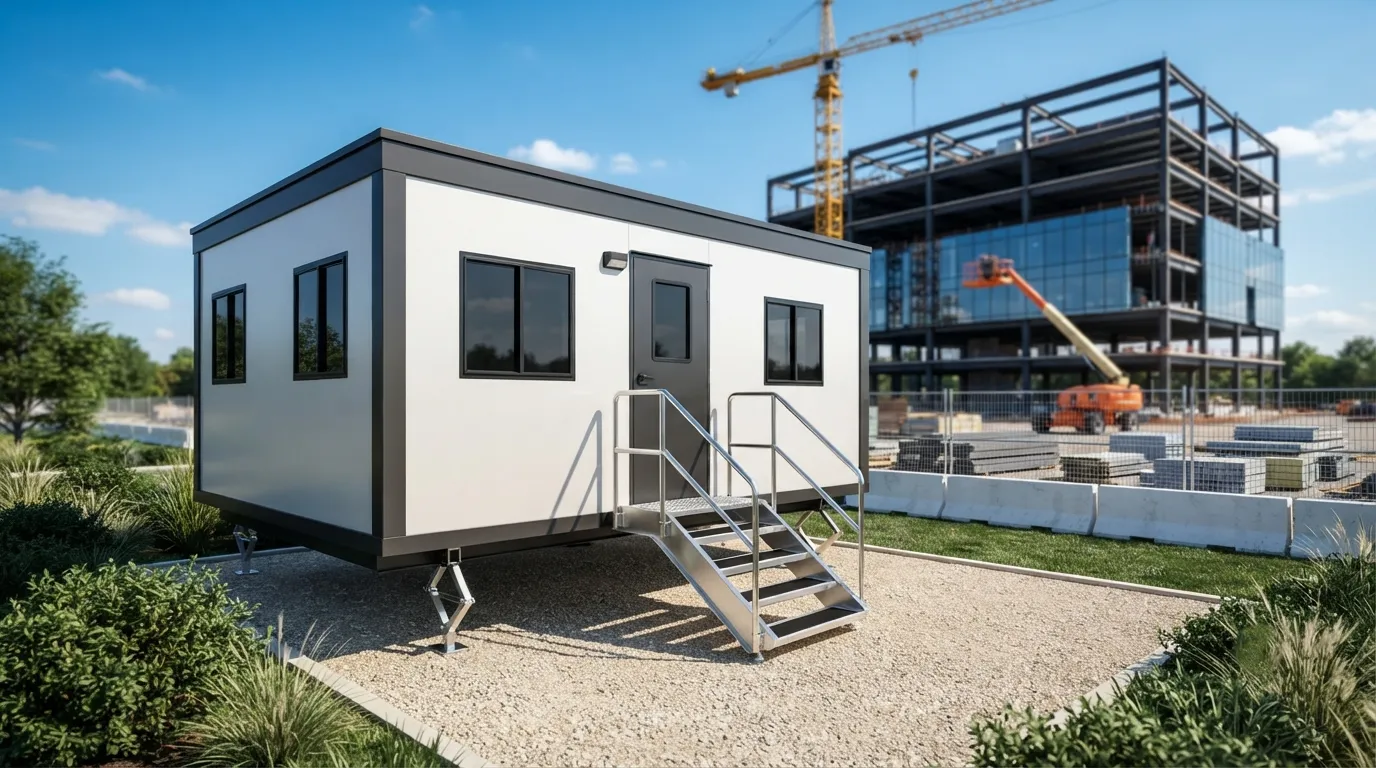
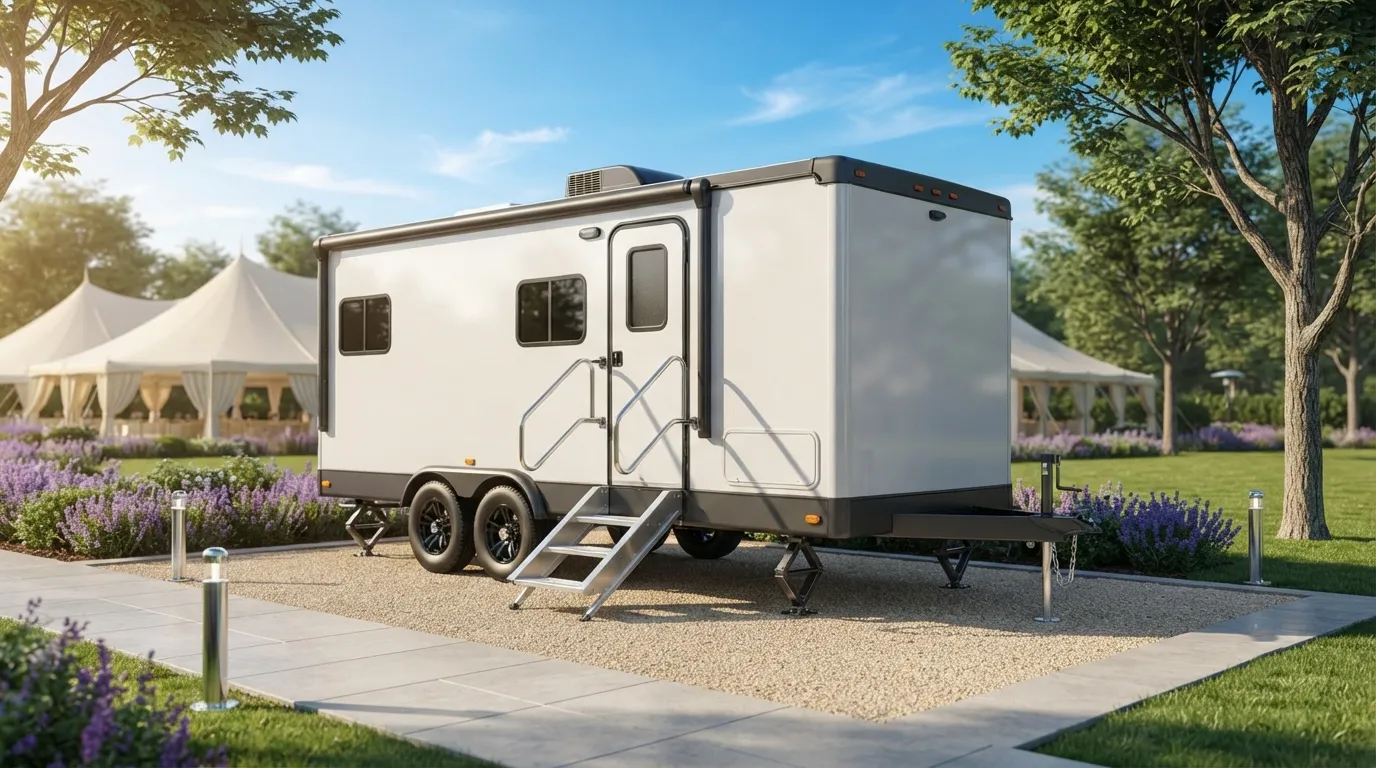
A porta potty handles the toilet half, but campers ask about hand and dishwashing almost as often, especially with kids in the group. A camping portable sink with a built-in water tank solves both. These units use a foot pump or gravity-fed tank instead of plumbing, run off no electrical hookup, and fit next to a standard porta potty at the same site. OSHA 1926.51(a)(1) requires an adequate supply of potable water at places of employment, and while a private campsite isn't a job site, the same basic setup, potable water plus soap and towels, is what actually keeps a group healthy over a multi-day stay. If your group is doing anything with paints, stains, or bug spray around camp, OSHA 1926.51(f)(1) applies to handwashing after contact with coatings or insecticides specifically, not general camp hygiene. For bigger family reunions or multi-family camping trips, a restroom trailer rental or even a 2 stall restroom trailer beats juggling multiple single units, and a shower trailer rental covers longer stays where people want an actual shower, not a wet wipe. Seattle's rain pattern matters here too. NOAA's 1991-2020 normals put the city at 91.0 days a year with 0.10 inch or more of precipitation, the highest of five nearby cities compared, so a sink station with a splash guard and a unit with good drainage underneath both earn their keep on a wet weekend.
Whether you need one unit for a weekend or a small fleet for a reunion, porta potty rental in Seattle and the broader portable toilet rental options cover most camping scenarios. Compare porta potty rental cost against a monthly porta potty rental if your camp runs longer than a few weekends, and check service areas if you're camping outside city limits toward Issaquah or Bothell.
How much does a porta potty rental cost for a camping trip?
A standard unit runs $100 to $350 a day, or $130 to $500 for a full week if your trip runs longer. Add a delivery fee, typically $50 to $150 for a week-long rental, and confirm site access ahead of time so the truck can get in and out.
Can I rent just one porta potty for a weekend camping trip?
Yes. A single standard unit is the normal setup for weekend camping. Daily rates run $100 to $350, and weekend pricing for a standard unit typically lands between $125 and $400, depending on group size and how far the delivery truck has to travel.
Is there a small porta potty option for a tent camping trip?
The standard unit is already compact at 44 by 48 inches on the ground, which fits most tent camping sites without crowding the area. There's no smaller commercial option than that footprint, but placement close to tents keeps the walk short at night.
Do I need a portable sink too, or is hand sanitizer enough?
Sanitizer helps between washes but doesn't replace soap and water under 29 CFR 1910.141(d)(2). A portable sink with its own water tank, no hookup needed, covers hands and dishes both and pairs easily with a standard toilet unit at the same site.
How far in advance should I book for a Seattle camping trip?
Book as early as you can once dates are set, especially for busy summer weekends when demand for standard units rises across Seattle. Confirm site access, ground conditions, and whether the trip touches any public right-of-way that might need a permit check first.
Next step
Get a delivery date
Tell us the address, the dates and the headcount. We size the order and confirm the route.