
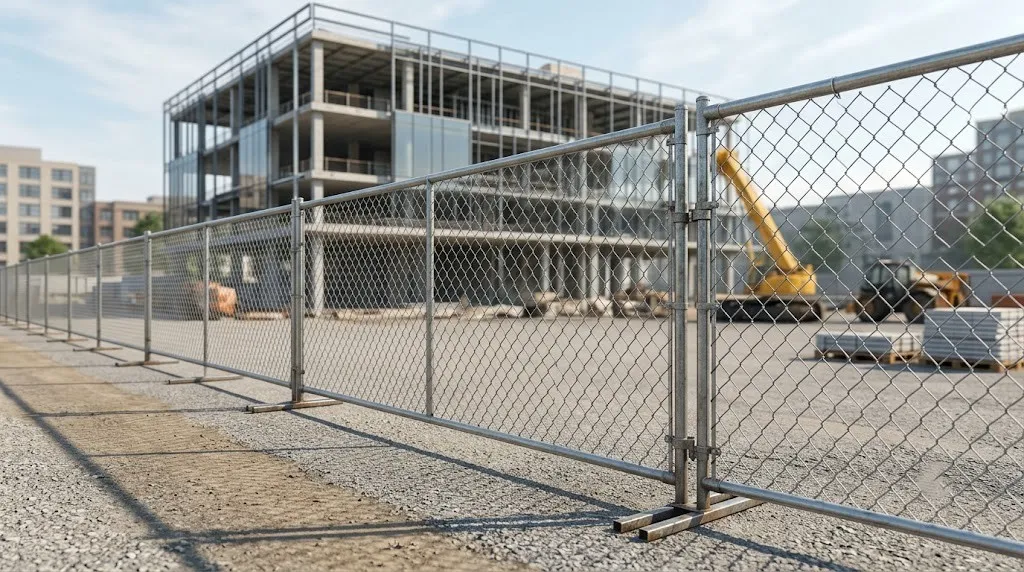
What is a chain link temporary fence panel?
A chain link temporary fence panel is a freestanding cyclone chain link temporary fence section, usually 6 feet tall and 10 feet wide, held up by rubber or concrete feet instead of a buried post. No trenching, no concrete cure time. Crews clip panels together with couplers to build a straight run or wrap a corner, and you can pull a panel and reset it somewhere else on the same site in minutes. That flexibility is why temporary fence rental is the default choice over permanent chain link on active job sites, home remodels, and short-term storage yards around Seattle. Pair fencing with crowd control barrier rental if part of the site needs pedestrian control rather than a full perimeter. Panels also work well paired with construction site services like a roll-off dumpster rental or a temporary power pole, keeping the whole footprint contained behind one fence line.
How much does temporary chain link fence rental cost?
| Duration | Low | Typical | High |
|---|---|---|---|
| Day | $30 | $50 | $75 |
Daily rate is the only band we can quote with confidence right now; weekly and monthly chain link pricing depends on panel count and site duration, so ask Seattle Porta Pros for a quote sized to your run of fence. Compare that against temporary fence cost drivers city-wide before you commit to a footage count. If you're weighing fence against a chain link temporary fence alternative like barrier walls, crowd control barrier rental is worth pricing side by side.
Where can I place temporary fence in Seattle?
Placement inside your own property line is straightforward. Placement in the public right-of-way is not automatic in Seattle: SDOT requires a Street Use permit before anything, including containers and dumpsters, sits in a street or parking lane, under Seattle Municipal Code 15.04.010, which makes it unlawful to use a public place without a written permit from the Director of Transportation. SDOT's named container permit does not list portable toilets or fence panels specifically, so if your fence run needs to sit past the sidewalk edge, confirm the requirement with SDOT before delivery rather than assuming it's covered. For container placements that are named, SDOT still requires 30 feet of clearance from intersections, 10 feet from driveways, and 15 feet from hydrants, and those sightline rules are a reasonable baseline to plan a fence line around even where a fence itself isn't the named permit type. See porta potty permit requirements and dumpster permit requirements for how the same permit process applies to other equipment on your site.
Do I need fencing around a portable restroom?
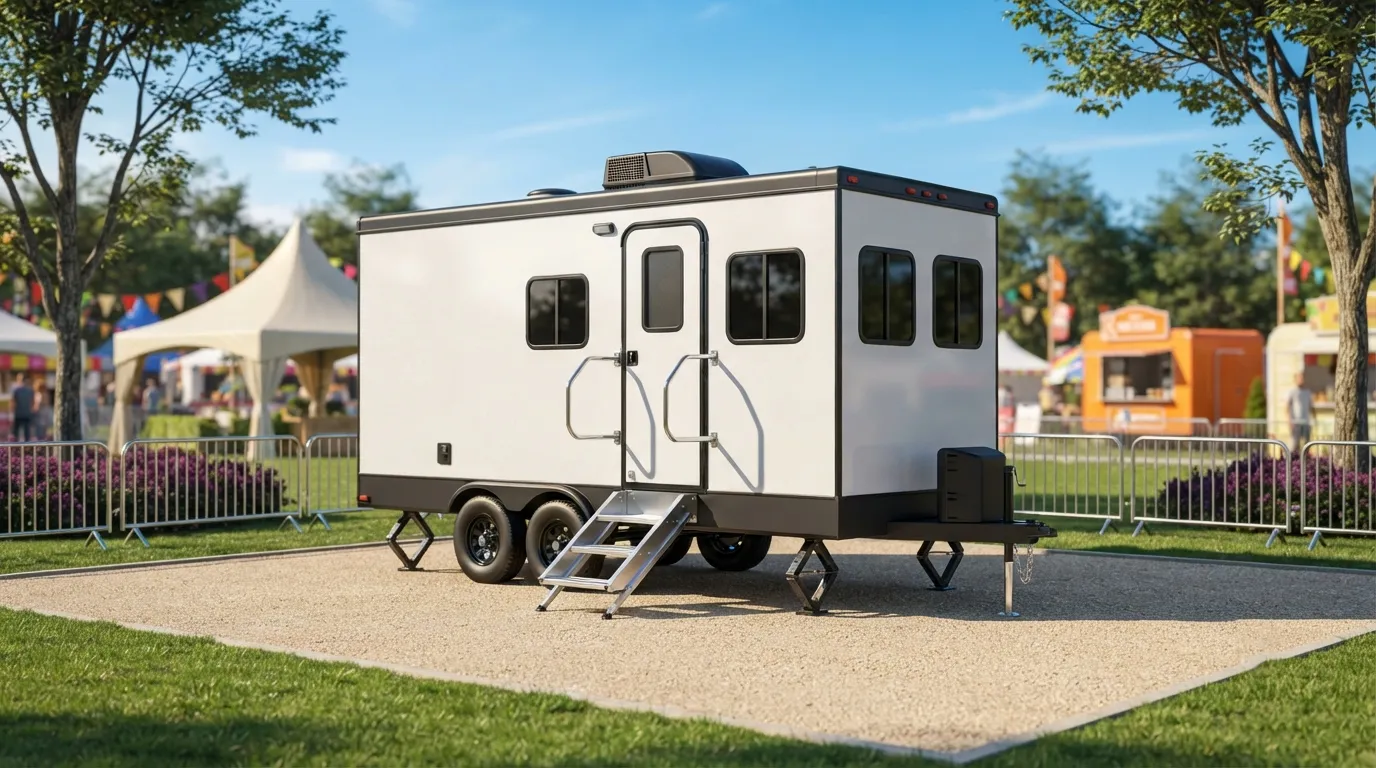
Not always, but it helps on public-facing sites. A fenced perimeter around a portable toilet rental or ADA accessible porta potty keeps foot traffic controlled at festivals, marathons, and county fairs. OSHA 1926.51(c) sets the toilet count crews need on a job site by headcount, and fencing around that cluster keeps the units from becoming an informal walkway. For events, check event restroom rental or festival restroom rental for how sanitation and perimeter fencing get planned together.
How long can I rent temporary chain link fence for?
Most jobs run daily, weekly, or monthly depending on the project. A weekend event usually books daily-rate panels for the two or three days needed, while a construction job spanning months typically negotiates a monthly rate. Ask Seattle Porta Pros what fits your Seattle timeline.
Does a chain link fence come with gates?
Yes, gate panels are standard in most fence runs, sized to match the swing width crews and delivery trucks need. Specify gate location and width when you order so the layout works with your site's entry points and any roll-off delivery needing 60 feet of straight clearance behind the truck.
Can I set up chain link fence myself?
Yes, panels are designed for two people to lift and couple without tools. Seattle Porta Pros delivers and can place the full run if your crew doesn't have the labor to spare that day.
What's the difference between chain link and crowd control barrier?
Chain link panels are taller and better for security and site boundaries; barricades are shorter, interlocking, and built for pedestrian channeling at events. See crowd control barrier rental for that option.
Is a permit required for fencing in Seattle?
It depends on placement. Fence built on private property generally doesn't need a Street Use permit, but anything extending into the right-of-way should be confirmed with SDOT first, since the named permit categories don't specifically list fence panels.
Next step
Get a delivery date
Tell us the address, the dates and the headcount. We size the order and confirm the route.