
How Often Does a Septic Tank Need Cleaning?
The 3 to 5 year range isn't a guess pulled from thin air. It's driven by tank size versus household size: a small tank serving a big family fills faster, a large tank serving two retirees can stretch toward the long end. If you've added a bedroom, a teenager, or a dishwasher since your last pump, move up your schedule. Seattle homes on well-established septic systems, especially in older neighborhoods outside the sewer grid, tend to need septic tank pumping cost checks more often than newer builds because older tanks were often sized smaller. If you're not sure when your tank was last serviced, that uncertainty alone is a reason to schedule a look. Waiting for a slow drain or a bad smell means you've likely already passed the ideal pumping window, and a septic tank cleaning at that point is playing catch-up rather than staying ahead of it. Homes near Mercer Island, 8.9 miles southeast of Seattle, and out toward Issaquah, 16.7 miles east, sit on similar soil conditions and follow the same rough timeline.
Why Does Septic Tank Cleaning Frequency Change By Household?
Water use is the biggest variable. More people, more laundry, more showers means more liquid moving through the tank and less time for solids to settle before they'd otherwise get pumped out. A house with a garbage disposal sends more solid material into the tank too, which can shrink the interval closer to 3 years instead of 5. None of this is unique to septic systems only, either: businesses running a commercial kitchen deal with a related issue on the grease side, where a grease trap pumping schedule follows fats, oils, and grease building up to 25 percent of the liquid depth in the interceptor, at which point it needs servicing. Septic tanks work on solids settling instead of grease floating, but the underlying lesson is the same: the more you put through the system, the sooner it needs attention. If you're renting a property short-term or running a construction crew through a job site without sewer hookup, a holding tank rental sidesteps the septic question entirely by holding wastewater until it's hauled off.

What Happens If You Don't Pump On Schedule?
Solids that aren't removed eventually work their way into the drain field, and once that happens, the fix gets expensive fast. Slow drains, gurgling pipes, and standing water near the tank are all warning signs worth reading before they turn into a backup inside the house. If you're already seeing those signs, check septic tank warning signs and get a pump scheduled rather than waiting for a full failure. Emergency situations do happen, and when they do, emergency septic service exists for exactly that reason, but it costs more and stresses more than a planned visit. For homeowners weighing what a routine or urgent pump-out runs, actual pricing sits in the table below. These are measured ranges pulled from real service calls, not estimates.
| service | duration | low | typical | high |
|---|---|---|---|---|
| septic pumping | day | $150 | $250 | $300 |
| septic pumping | weekend | $50 | $100 | $150 |
A weekend visit often runs lower than a full weekday appointment because it's typically a shorter, more contained job. Either way, budgeting for routine pumping is far cheaper than an emergency call after a drain field fails.
Can You Extend the Time Between Pumpings?
Yes, to a point. Watching water use, spacing out heavy laundry days, and avoiding a garbage disposal all help solids settle at a slower rate. None of that replaces pumping altogether, though. Regulation in Washington splits oversight of septic systems between two state agencies: the Washington State Department of Health regulates on-site sewage systems, while the Washington State Department of Ecology governs the treatment and land application side once septage leaves your tank. Neither agency requires a specific frequency for homeowners, but the 3 to 5 year guidance reflects what keeps most residential tanks working reliably long-term. Rules around applying septage to lawns or public-contact sites are strict, and pumpers who service only septic tanks and portable toilets without treating or land-applying septage themselves fall outside some of Ecology's biosolids permitting requirements. That's a detail that matters more for the company doing the pumping than for the homeowner scheduling it, but it explains why a septic pumping service provider handles the transport and disposal side carefully.
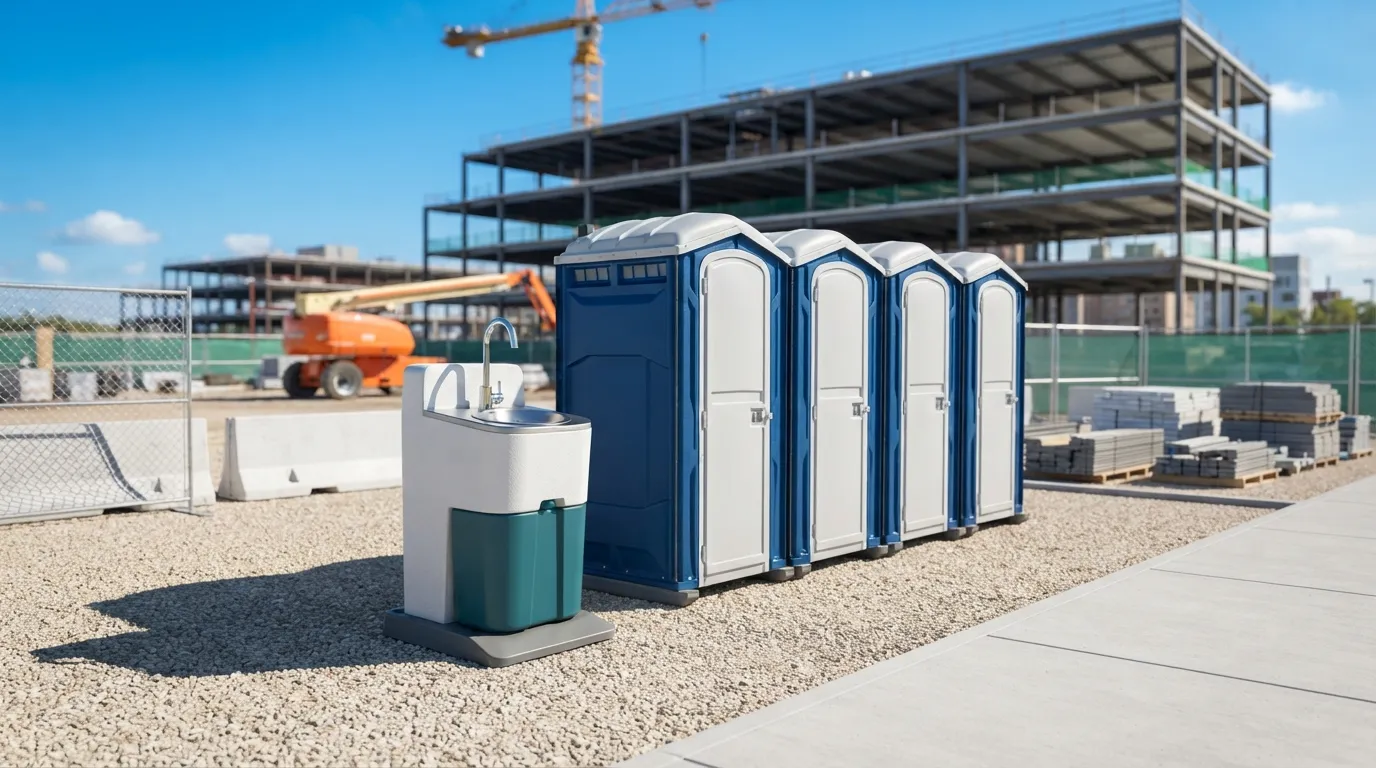
If you're building or renovating and need site sanitation instead of septic work, that's a different conversation entirely. Construction crews around Seattle typically need portable restrooms sized to OSHA 1926.51(c), which sets toilet counts by crew size: one facility for 20 workers or fewer, scaling up from there. A construction site services package usually bundles that alongside a roll-off dumpster rental and sometimes a temporary fence rental for site security. Homeowners doing a renovation without full plumbing access often add a home renovation porta potty for the crew rather than straining the household septic system during the work.
How much does septic tank pumping cost in Seattle?
A routine pump-out runs $150 to $300 for a day appointment, or as low as $50 for a weekend visit, based on measured service data. Exact cost depends on tank size, access, and how long since the last pumping. See septic tank pumping cost for a fuller breakdown.
How do I know if my septic tank needs pumping now?
Slow drains, gurgling pipes, sewage odor near the tank, or standing water in the yard are the clearest signs. Don't wait for a backup inside the house. Review septic tank warning signs and book service as soon as you notice any of these.
Does household size really change the pumping schedule?
Yes. More people means more water and more solids moving through the tank, which shortens the safe interval. A two-person household might stretch to 5 years; a family of six may need pumping closer to every 3 years.
What's the difference between septic pumping and a portable holding tank?
Septic pumping empties an underground tank connected to your home's plumbing. A holding tank rental is a standalone unit that holds wastewater temporarily, useful for construction sites or properties without sewer access at all.
Can Seattle Porta Pros help with both septic pumping and site sanitation?
Yes. Seattle Porta Pros handles septic pumping alongside portable restrooms, dumpsters, and related site services, so a single call covers a renovation, an event, or a routine home septic appointment.
Next step
Get a delivery date
Tell us the address, the dates and the headcount. We size the order and confirm the route.