
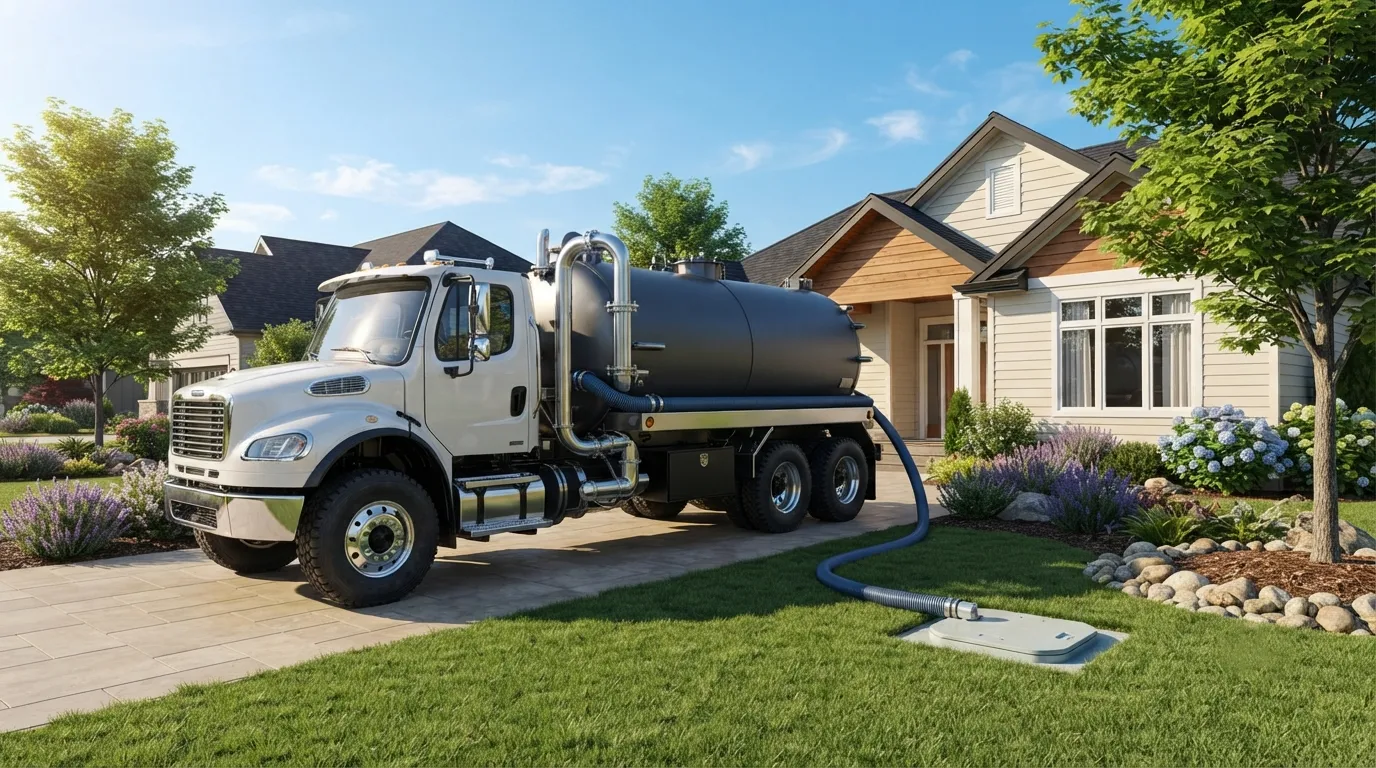
How Often Does a Septic Tank Need Pumping?
Every 3 to 5 years is the standard interval for a 1,000 gallon tank, and household size is the biggest variable, not the calendar. A family of six fills a tank faster than a couple living alone, so the honest answer is "it depends on use," not a fixed date. If you are not sure which end of that range applies to your house, our septic tank cleaning visit includes a tank-level check so you are not guessing next time. Homes near Mercer Island, 8.9 miles southeast of Seattle, and homes closer in still follow the same 3 to 5 year rule; it is about the tank and the household, not the zip code. If your property runs a garbage disposal hard or hosts frequent gatherings, lean toward the shorter end. We track this for repeat customers so pumping happens on schedule instead of after a problem shows up. For full detail on the math behind timing, see how often to pump a septic tank, and if you want cost broken out by interval, septic tank pumping cost walks through it separately from this page.
What Are the Warning Signs a Septic Tank Needs Pumping?
Slow drains in more than one fixture at once, gurgling in the pipes, standing water over the drain field, and sewage odor near the tank lid are the four signs worth acting on. Any one of these on its own might be something smaller, but two together usually means the tank is full or close to it. Don't wait for a backup into the house; that's the expensive version of this problem. If you're renovating and running portable facilities anyway, our home renovation porta potty customers often catch septic issues during the same project and bundle the pumping call with delivery. Grease buildup shows different symptoms than a full tank, and if you run a commercial kitchen, that's a separate service; see grease trap pumping for that side of things. Full symptom detail, including what a lid pooling with water usually means versus a slow single drain, is on septic tank warning signs. Catching the signs early keeps a routine visit routine instead of turning it into an emergency septic service call.

What Does a Septic Pumping Service Include?
A standard visit includes locating and uncovering the tank lid, pumping the tank down, checking the baffles, and a visual inspection of tank condition. We check the inlet and outlet baffles because a failed baffle is often the real reason a tank seemed to fill fast, and it's a fix worth catching during a routine pump rather than during a backup. We also note liquid level relative to solids, since a grease interceptor is judged by a similar standard, pumped once fats, oils, grease and solids reach 25 percent of liquid depth, and a septic tank benefits from the same kind of measurement. If your property needs a temporary toilet while the yard is torn up for access, we handle that through the same visit; see portable toilet rental or porta john rental for short-term coverage during the work. Larger properties sometimes need a holding tank rental if the system is offline longer than expected. We're upfront about what we find; if the tank shows wear beyond normal pumping, we'll tell you before doing anything else.

How Much Does Septic Tank Pumping Cost?
| unit | duration | low | typical | high |
|---|---|---|---|---|
| septic | day | 150 | 250 | 300 |
| septic | weekend | 50 | 100 | 150 |
A standard daytime pumping call for a residential tank runs in that day-rate range above, with weekend scheduling priced separately since it's a different service window. Tank size, access difficulty, and how long since the last pump all move the price within that band. A tank that hasn't been serviced in six or seven years often takes longer to pump and inspect than one on a normal 3 to 5 year cycle, and that shows up in time on site more than in a different rate. For a full cost breakdown across scenarios, septic tank pumping cost and septic pumping service both cover pricing angles this table doesn't. If you're comparing this against renting a unit instead of pumping, our porta potty rental cost and porta potty rental per day pages price that option. Seattle properties with tight driveway access sometimes need extra hose length, which we quote up front, not after the truck arrives.
Do You Offer Holding Tank Service for Properties Without Septic?
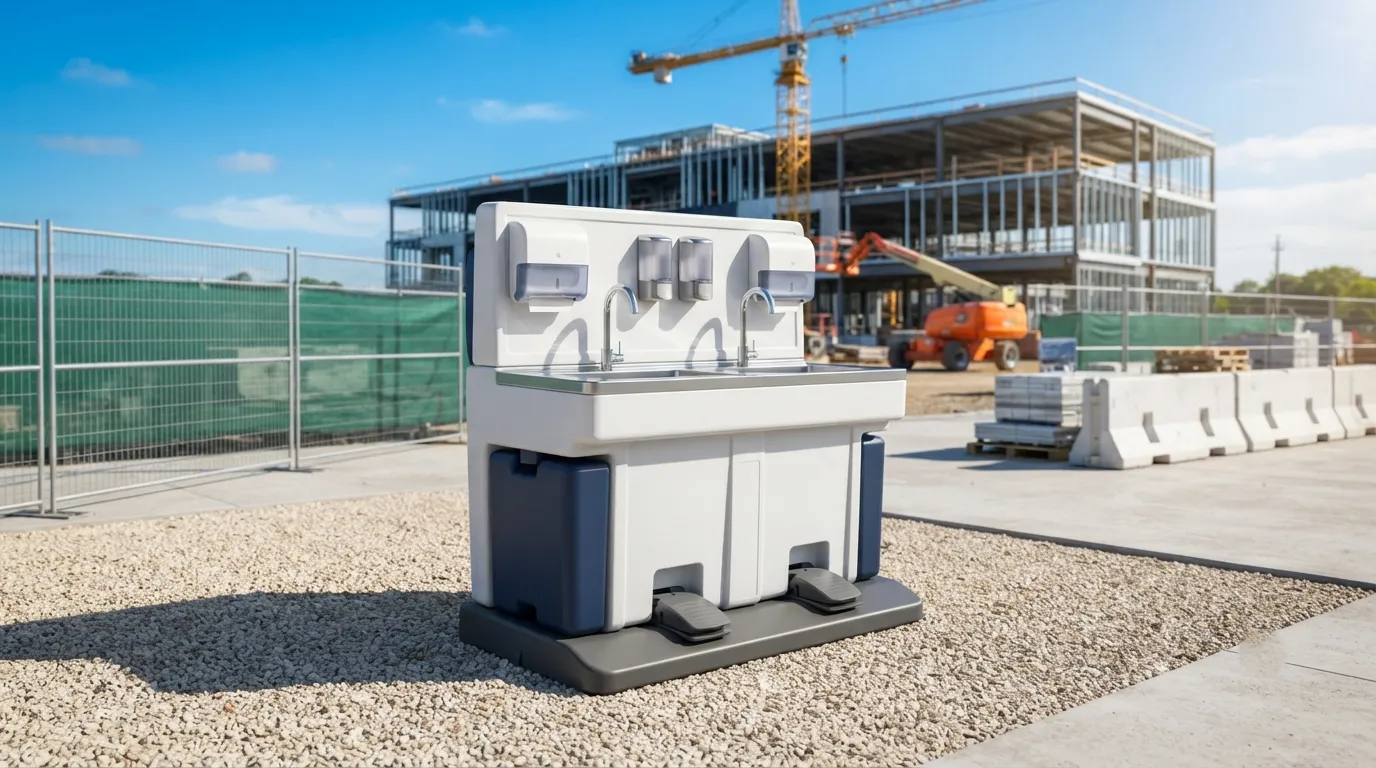
Yes. Some Seattle properties, particularly ones mid-renovation or without a functioning system, need a temporary holding tank rather than a pump-and-go visit on an existing septic tank. We deliver, service on schedule, and pump out holding tanks the same way we handle standard septic work, and we can pair that with handwashing station rental or a portable sink rental if the property needs handwashing coverage too under 29 CFR 1910.141(d)(2), which requires soap and towels or a hand-drying device at wash stations; hand sanitizer alone doesn't satisfy it. See holding tank rental for setup details and typical duration. This comes up often on construction sites already running construction site services or a construction dumpster rental, where the septic system is disconnected during work. If your project is farm-based instead, farm and agricultural restrooms covers a related setup for hand-labor crews under field sanitation rules.
Can You Handle an Emergency Septic Pumping Call in Seattle?
Yes, we run emergency response for backups and full tanks, and we prioritize calls where sewage is already surfacing over routine scheduling requests. A backup doesn't wait for a convenient week, so we build slack into the schedule for exactly this. If you're located near Shoreline, 11.8 miles north of Seattle, or out toward Burien, 12.4 miles south, we still treat these as same-priority calls, not lower-priority because of distance. Full detail on how fast we respond and what counts as urgent is on emergency septic service; we also run emergency porta potty rental for properties that need a working toilet while the tank issue gets sorted. Washington splits septic oversight between two state agencies: the Department of Health regulates on-site sewage systems, and the Department of Ecology governs biosolids and land application, meaning septage from a Seattle tank cannot legally go onto lawns or home gardens. We handle disposal the right way every time, not as an afterthought.
Frequently Asked Questions
How much does septic tank pumping cost for a 1,000 gallon tank?
A residential pumping visit typically runs in the range on the table above, with the exact number depending on access and time since the last service. Difficult driveway access or a tank buried deeper than usual can push it toward the higher end. We quote before starting, not after.
How often should I pump my septic tank in Seattle?
Every 3 to 5 years for most 1,000 gallon residential tanks, driven mainly by household size and daily water use. A larger household should plan for the shorter end of that window. If you're unsure, we check tank level during the visit and tell you where you stand.
What happens if I wait too long to pump my septic tank?
Solids build up past the safe level and start backing into your drains or surfacing over the drain field. That's a much more expensive fix than a routine pump. Watching for slow drains and odor near the tank lid catches it before it gets there.
Do you serve properties outside Seattle proper?
Yes, we cover surrounding cities including Edmonds at 17.0 miles north and Issaquah at 16.7 miles east. Distance doesn't change how we prioritize a call. Check service areas for the full coverage list.
Can I get a holding tank instead of pumping my septic system?
Yes, if your system is offline or your property has no septic at all, a holding tank is the right substitute. We deliver, service, and pump it on a schedule you set. See holding tank rental for setup and typical rental length.
Is a grease trap the same as a septic tank?
No, they're different systems with different service triggers. A grease interceptor is pumped once fats, oils, grease and solids hit 25 percent of liquid depth, while septic pumping follows the 3 to 5 year household-driven schedule. See grease trap pumping for the commercial-kitchen version of this service.
Next step
Get a delivery date
Tell us the address, the dates and the headcount. We size the order and confirm the route.