
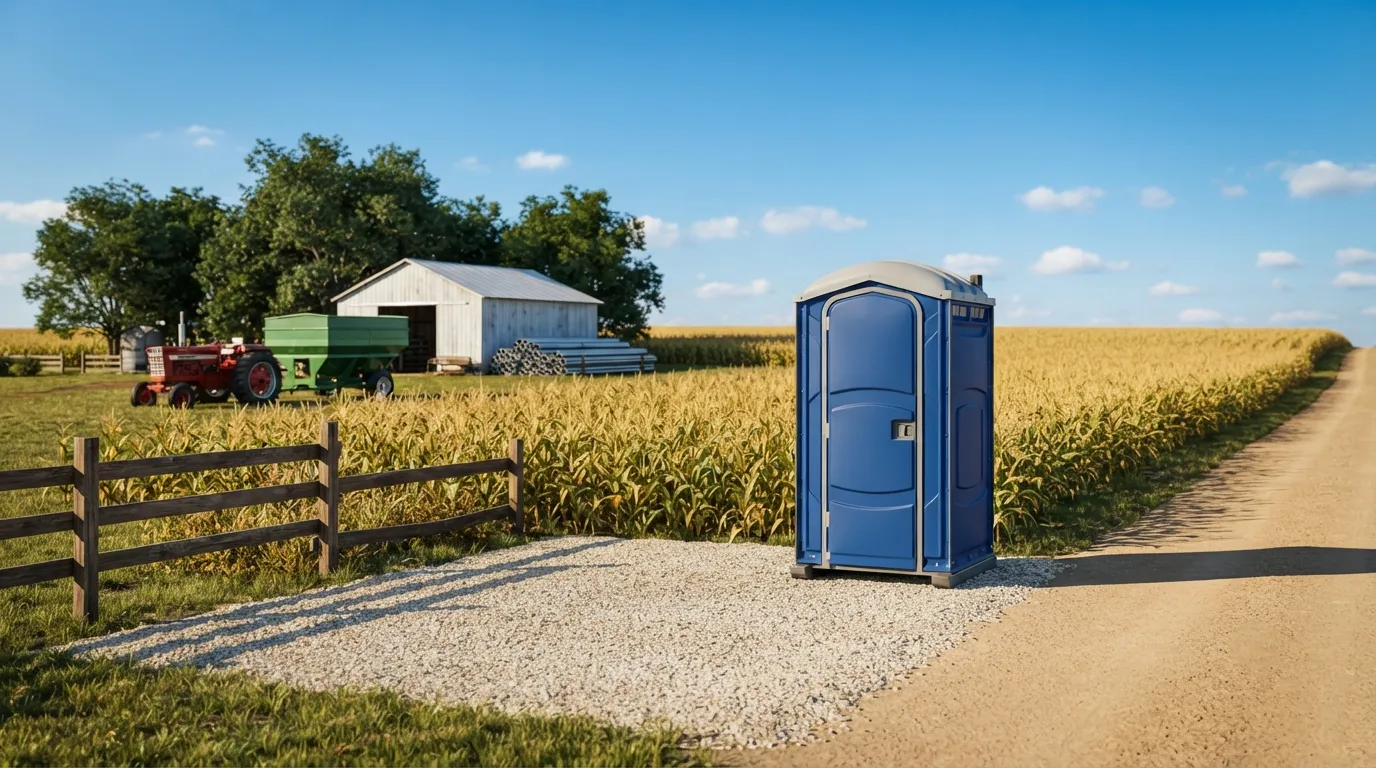
How Many Restrooms Does a Farm Crew Need?
The number comes down to headcount, not acreage. OSHA 1928.110 governs field sanitation in agriculture and requires potable water, toilets and handwashing facilities for hand-labor employees, at a rate of one facility per 20 workers, and it has to sit within a quarter mile walk of wherever people are picking, pruning, or packing. That is a tighter distance rule than most construction sites get, and it applies even when crews also need a porta john rental near equipment sheds. If your crew rotates through several fields in a day, you need units that can move with them, not one fixed spot near the barn. Seattle Porta Pros can spread standard porta potty rentals across multiple field zones and shift them as harvest moves. For crews near 20 or more workers, check the OSHA portable toilet requirements page for the construction-site ratio too, since some farm operations blend field labor with barn or equipment work that falls under different rules, and larger crews sometimes prefer an ADA accessible porta potty alongside standard units. If you are not sure how many units your operation needs, our how many porta potties do I need guide walks through it, and a free quote request gets you an exact count fast.
What Does a Farm Restroom Setup Cost?
Pricing depends on how long you need units and how many. A single standard unit runs from $100 a day up to $350 for busier setups, and a full week falls between $130 and $500 depending on service frequency. Seasonal farms often want month-long placement through harvest, which lands between $125 and $325 a month per unit, a pattern covered in more detail on our monthly porta potty rental page. Delivery adds a separate fee, typically $50 to $150 for a week-long placement, and our porta potty rental cost and porta potty rental per day pages break down those numbers further.
| Duration | Low | Typical | High |
|---|---|---|---|
| Day | $100 | $150 | $350 |
| Week | $130 | $200 | $500 |
| Month | $125 | $200 | $325 |
Service intervals matter more on a farm than in a parking lot. ANSI/PSAI Z4.3 sets a baseline of one service visit per week for up to 10 users across a 40-hour week, but a crew of 20 hand-laborers working six days will need more frequent pumping to avoid a mid-week problem. Ask about service schedules when you book, especially during peak harvest when unit count and crew size both climb. If your operation also needs handwashing separate from the toilet, a handwashing station rental or portable sink rental covers that requirement directly, since 29 CFR 1910.141(d)(2) requires soap and towels or a hand-drying device at wash stations, and hand sanitizer alone does not satisfy that standard.
Do Farms Near Seattle Need a Permit for Portable Toilets?
Placement on private farmland generally does not trigger the same permit process as placement in the public right-of-way in Seattle. Right-of-way placement is a different matter entirely: Seattle Municipal Code 15.04.010 makes it unlawful to use any public place without a written permit from SDOT, and that rule covers streets and sidewalks, not private acreage out past the city's working farms, a distinction also worth reading about on our Seattle porta potty rental page. Most agricultural operations near Seattle sit on private land, so the SDOT Street Use permit process that applies to storage containers and dumpsters in the right-of-way likely does not apply to your field units. Whether a portable toilet specifically needs an SDOT permit if it does end up near a public road has not been confirmed by us, so if any part of your setup touches a street, sidewalk, or public easement, checking with SDOT directly before delivery is the safer move. If your farm sits closer to town, our porta potty permit requirements and porta potty placement guide pages cover the general placement rules we've seen apply across the region. Farms near Issaquah, roughly 16.7 miles east of Seattle, or out toward Sammamish at 21.3 miles east, tend to have more room to work with than tighter urban lots, and both areas fall within our service areas.
Beyond toilets, a lot of farm operations pumping wastewater or managing runoff also need septic support. Washington splits septage rules between the Department of Health, which regulates on-site sewage systems, and the Department of Ecology, which governs biosolids and land application. If your property runs a septic system for a farmhouse or processing building, septic pumping service and how often to pump a septic tank are worth reading before harvest season gets busy. Farms running a commercial kitchen or food stand may also need grease trap pumping, since a grease interceptor needs pumping once fats, oils, grease and solids hit 25 percent of the liquid depth, and a holding tank rental can bridge gaps between pump-outs.
For crews working through Seattle's wetter months, check porta potty in winter before committing to a long placement, and pair your restroom order with a temporary fence rental or chain link temporary fence if you need to keep livestock or equipment areas separated from foot traffic, plus a roll-off dumpster rental for harvest debris and packaging waste.
How far will units need to travel to reach my farm?
Seattle Porta Pros services farms across the metro, including areas near Sammamish, 21.3 miles east of Seattle, and Issaquah, 16.7 miles east. Delivery distance affects scheduling, not unit availability, so tell us your location when you request a quote.
Can I get restrooms for just harvest season?
Yes. Many farms rent by the month through harvest rather than committing year-round. Monthly rates run $125 to $325 per unit, and you can adjust unit count as crew size changes week to week.
Do farm restrooms need handwashing stations too?
If your crew handles produce or works with chemicals, yes. A dedicated handwashing station keeps you aligned with field sanitation expectations under OSHA 1928.110, and it is a separate rental from the toilet unit itself.
What if my crew works multiple fields in one day?
Units can be placed at each work zone and moved as your crew shifts location. OSHA 1928.110 requires facilities within a quarter mile walk of the work area, so spacing matters more than total unit count on spread-out farms.
Is there a minimum rental period?
Daily rentals start at $100, but most farm operations rent by the week or month since crews return to the same fields repeatedly through a season. Ask about your specific schedule when requesting a quote.
Next step
Get a delivery date
Tell us the address, the dates and the headcount. We size the order and confirm the route.