
How do porta potties work on a construction site?
A construction dumpster rental job site and a portable toilet often show up together, and that's not an accident. OSHA 1926.51(c) sets the ratio: one toilet for 20 workers or fewer, then one toilet seat and one urinal per 40 workers once you cross that line, scaling down again per 50 workers at 200 or more on site. That's why a foreman in Seattle counting heads on a crew has to think in blocks of 20, not just add a unit when someone complains. A construction worker running to a porta-potty on a break needs it close, so placement near the work zone matters as much as the count. Most contractors renting a standard porta potty rental skip the deluxe upgrade for job sites and save it for event restroom rental work instead. Tank size stays the same either way. What changes is service frequency, since a full crew burns through capacity faster than a weekend crowd, and a route that's fine for a slow week falls behind on a five-day pour schedule. Renters comparing a porta potty rental per day rate against a monthly porta potty rental rate should factor that service cadence in before they pick a duration.
How does a portable sink work?
A portable sink runs on a self-contained water tank, a foot pump or battery pump to push water to the faucet, and a wastewater tank underneath to catch the runoff, no hookup needed. That setup is why a portable sink rental unit can sit next to a food truck or a farm crew with nothing but a flat pad under it. 29 CFR 1910.141(d)(2) requires soap and towels or a hand-drying device at washing facilities, and hand sanitizer alone doesn't satisfy that. Under OSHA 1926.51(f)(1), washing facilities are specifically required where crews apply paints, coatings, herbicides or insecticides, so a painting crew in Seattle handling coatings needs a sink on site, not just a bottle of gel. A handwashing station rental covers that gap. Farm operations fall under a different standard: OSHA 1928.110 calls for potable water, toilets and handwashing within a quarter mile walk of hand-labor employees, at one facility per 20 workers, which is the backbone of farm and agricultural restrooms planning. If your crew is mixing chemicals, a hand sanitizer station rental is a supplement, not a substitute.
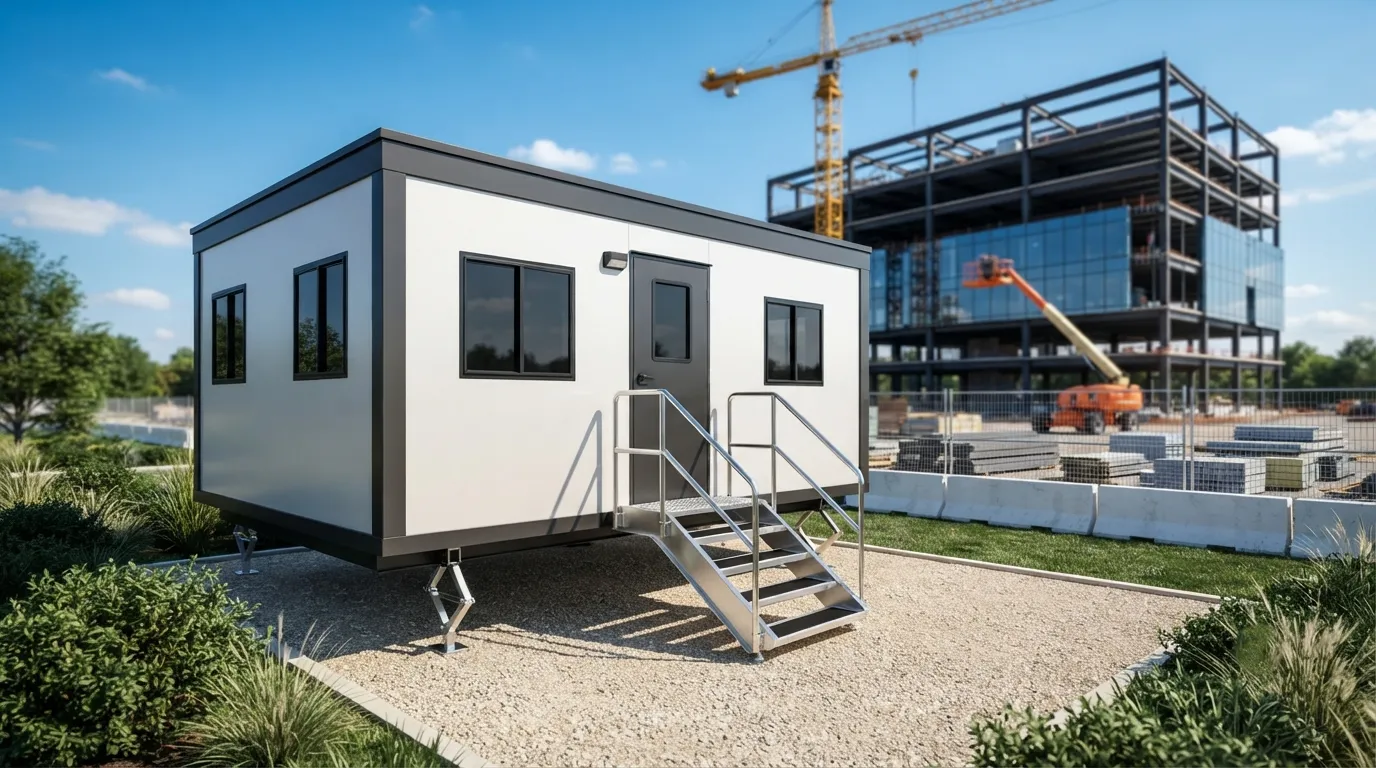
How do flushable porta potties work?
A flushable unit uses a small onboard water tank and a hand or foot pump to push a rinse of water through the bowl after each use, same as a deluxe flushable porta potty, instead of the chemical-only holding tank in a standard unit. The waste still goes into a holding tank below, it just gets a rinse cycle first, which cuts down on residue buildup between services. Restroom trailers take this further. A 2 stall restroom trailer or 4 stall restroom trailer usually runs a true flush system tied to an onboard freshwater supply, closer to a home bathroom than a job site unit. For weddings and upscale events, a luxury restroom trailer adds sinks with running water and interior lighting. ADA Standards section 404.2.3 sets a 32 inch minimum clear door opening, and section 403.5.1 calls for a 36 inch clear route, both of which apply to any ADA accessible porta potty or trailer unit. Under ADA 213.2, when single-user units are clustered, at least 5 percent, and never fewer than one, must be accessible, which matters for wedding restroom rental and festival restroom rental layouts with multiple units.
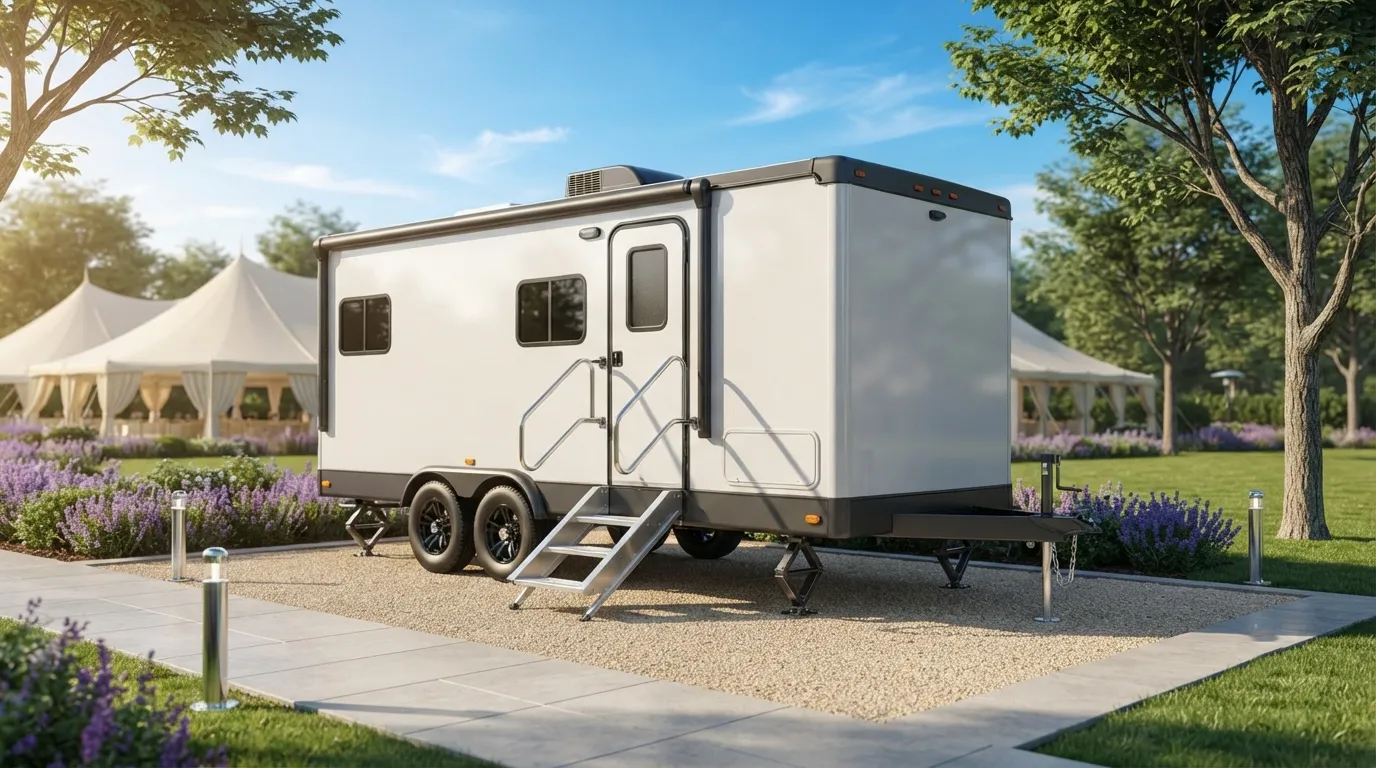
How do camping porta potties work?
A camping or event unit works the same as a job site standard, tank below, vent stack above, but the chemicals inside are what keep it usable over a weekend without service. Portable toilet chemicals near me searches usually turn up blue holding tank deodorizers, which break down waste and mask odor between pump-outs, distinct from septic tank cleaning chemicals meant for a home system. Septic tank cleaning chemicals are a different product entirely, formulated for a buried tank, not a portable holding tank, and using the wrong one can cause problems either way. A residential septic tank typically needs pumping every 3 to 5 years depending on tank size and household use, which is why septic pumping service and septic tank cleaning are separate line items from porta potty rental entirely. For a camping porta potty setup on a rural property outside Seattle, drive distance matters too. Mercer Island sits 8.9 miles southeast of Seattle, Issaquah 16.7 miles east, and Sammamish 21.3 miles east, all distances that affect delivery routing and turnaround for weekend rentals.
| unit | day | week | month |
|---|---|---|---|
| standard | $100-$350 | $130-$500 | $125-$325 |
| ada | $200-$400 | n/a | n/a |
| deluxe | $85-$1200 | $150-$290 | n/a |
Anyone comparing these against a full porta potty rental cost breakdown will notice weekly rates don't scale down linearly from daily, since a route stop still costs the same whether it's day two or day six. Seattle placements in the public right-of-way, including anywhere near a curb or sidewalk, fall under SMC 15.04.010, which requires a written Street Use permit from SDOT before placement. Confirm exact placement rules with the city before delivery. For general porta potty permit requirements guidance, check with Seattle Porta Pros before your delivery date.
Do porta potties need power or water hookups?
No. A standard unit runs entirely on its holding tank and vent stack, no electric or water line needed. That's the whole appeal for remote sites. A portable toilet rental can go anywhere a truck can reach, including sites 60 feet from a straight delivery path.
How often do porta potties get serviced?
Once a week is the baseline under ANSI/PSAI Z4.3 for up to 10 users across a 40 hour week. Busier events or job sites need more frequent stops. Ask about a service plan when you book through Seattle Porta Pros.
Can I use household chemicals in a porta potty?
No. Standard holding tank deodorizers are built for portable units, not septic tanks or home plumbing. Using the wrong chemical can damage seals or interfere with pump-out equipment. Stick with what your rental company supplies.
Are flushable units worth the extra cost?
For events and weddings, most renters think so. A rinse cycle cuts odor and residue between services, which matters more at a multi-day event than a short job site rental. Compare a restroom trailer rental cost against a standard unit for your event size.
Do porta potties smell in the summer?
Heat speeds up odor buildup, so service frequency matters more in warm months. Seattle's mild summers help, but a unit sitting in direct sun still needs regular servicing. See do porta potties smell for more on ventilation and chemical treatment.
Next step
Get a delivery date
Tell us the address, the dates and the headcount. We size the order and confirm the route.