
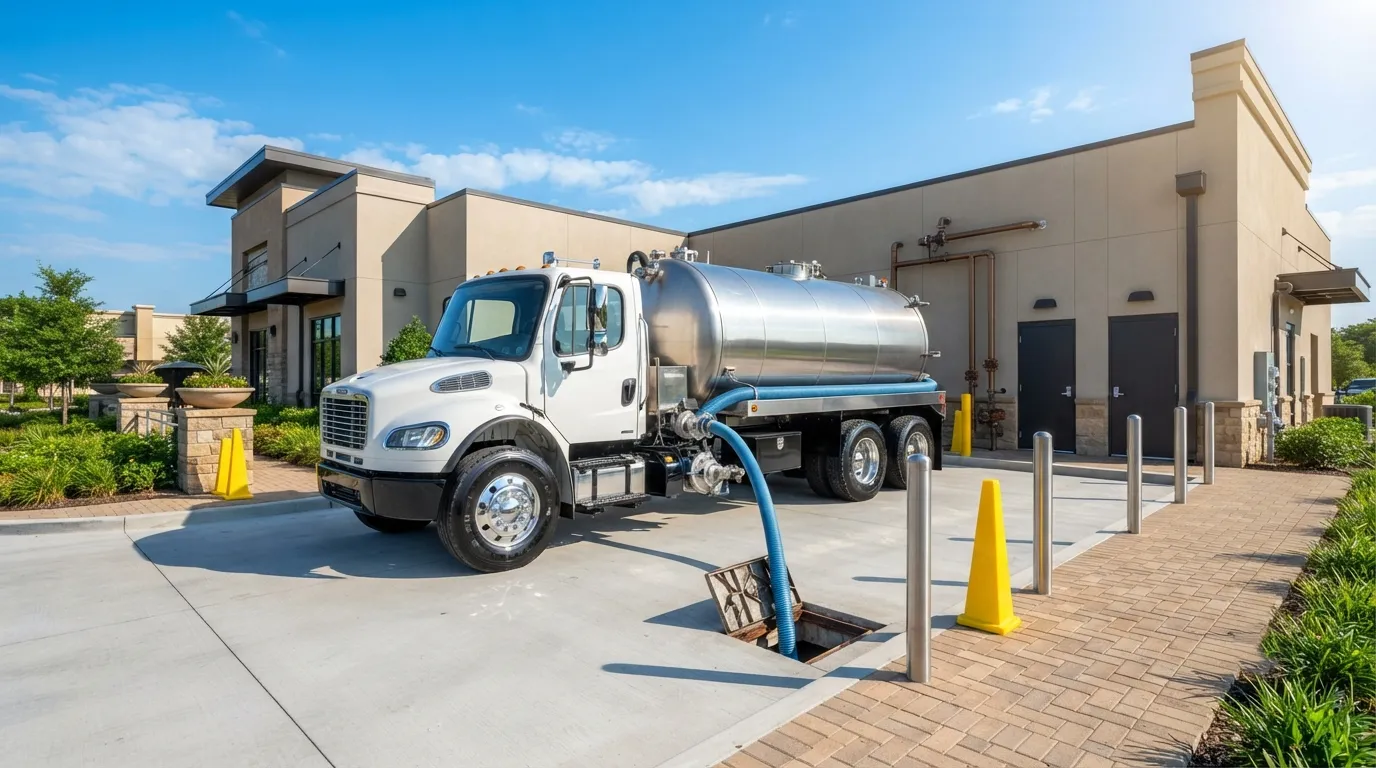
How Often Does a Grease Trap Need Pumping?
The 25 percent rule is the trigger, not the calendar. A busy fry station fills faster than a coffee shop with a small three-compartment sink. Volume matters more than the restaurant's size on paper. If you are also running a septic pumping service for a separate tank on site, know that a residential septic tank typically gets pumped every 3 to 5 years, a completely different rhythm than a commercial grease interceptor. Track it with a log instead of guessing. Once you know your interval, book septic tank cleaning or grease pumping on a repeating schedule so it stops being a fire drill. Seattle kitchens that skip logging tend to call us for emergency septic service instead of a routine visit, and that always costs more.
What Does Grease Trap Pumping Cost in Seattle?
Cost depends on tank size, grease load and how often you need service. A septic-style day visit in our region runs in the range below; grease interceptor pumping tracks close to that same day-rate band since it is the same vacuum truck and crew.
| service | duration | low | typical | high |
|---|---|---|---|---|
| septic/grease pump-out | day | 150 | 250 | 300 |
| septic/grease pump-out | weekend | 50 | 100 | 150 |
Commercial grease trap pumping for a busy Seattle restaurant on a monthly contract lands near the day-rate figure above per visit, not per month. For a full breakdown by job type, see septic tank pumping cost. If your line is backing up right now, emergency septic service crews cover Seattle and can also stage a holding tank rental while the trap gets cleared.
Is Emergency Grease Trap Pumping Available in Seattle?
Yes. A slow drain or a grease smell near the kitchen floor drain usually means the interceptor is near capacity, and waiting risks a backup mid-shift. We run emergency grease trap pumping across Seattle, plus emergency porta potty rental if a backup takes out the restroom too. Watch for septic tank warning signs like gurgling drains or standing water near a cleanout. Washington's Department of Health regulates on-site sewage systems under Chapter 246-272A WAC, and application of septage to lawns or public contact sites is prohibited, so pumped waste has to go somewhere permitted, not onto the ground. The Department of Ecology separately runs the biosolids program, though pumpers who service portable toilets or on-site systems without treating or land-applying septage sit outside those specific biosolids permit rules. We do not currently have a confirmed local health jurisdiction contact for septage permitting in King County, so if your facility manager asks, expect us to say we are checking rather than guessing.
For job sites running a mobile kitchen or food trailer near Mercer Island, 8.9 miles southeast of downtown Seattle, a grease trap and a portable restroom rental often get scheduled together. The same is true for events near Shoreline, 11.8 miles north, where a handwashing station rental usually rides along with the pump-out truck. If your site also needs waste hauled off, pair the visit with roll-off dumpster rental so one crew handles both.
How much does grease trap pumping cost per visit?
Expect a day-rate pump-out in the same band as a septic service call, roughly 150 to 300 dollars depending on tank size and grease load. Frequent commercial accounts often negotiate a standing rate. See septic tank pumping cost for the full table.
How do I know if my grease trap needs pumping now?
Check the grease layer against the tank depth. Once fats, oils, grease and solids hit 25 percent of the liquid depth, it is time. Slow drains, odor at the floor drain, or grease surfacing in the trap are the warning signs to act on immediately.
Is grease trap pumping different from septic pumping?
Same truck, different waste stream. A grease interceptor traps kitchen fats and solids before they reach the sewer, while a septic tank handles wastewater from the whole building. Both need scheduled pump-outs, but on different intervals. See how often to pump a septic tank.
Can I get emergency grease trap pumping same day in Seattle?
Yes, emergency crews serve Seattle for backups and overflowing traps. Call as soon as you notice slow drains or odor. If the restroom backs up too, emergency porta potty rental can bridge the gap until plumbing is clear.
Do commercial kitchens need a service contract for grease trap pumping?
Not legally required, but most Seattle kitchens set a repeating schedule anyway. A contract keeps the interval consistent and avoids surprise backups. Pair it with septic tank cleaning if you run a separate on-site system too.
Next step
Get a delivery date
Tell us the address, the dates and the headcount. We size the order and confirm the route.