
What Is Temporary Fence Rental?
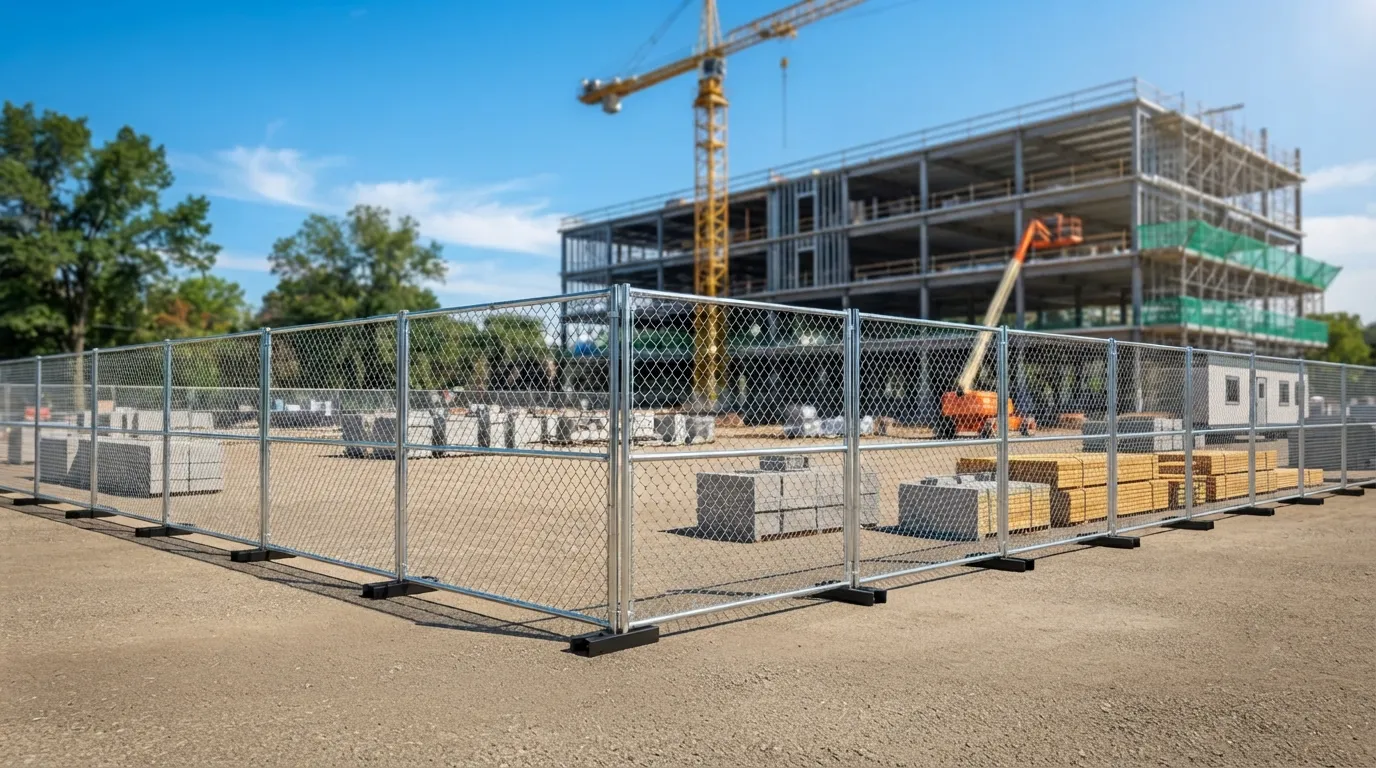
Temporary fence rental means a contractor drops off freestanding chain link panels, usually 6 feet tall, and lines them along your property or job site without digging a single post hole. The panels sit in rubber feet or concrete blocks and interlock with clamps, so a crew can move a 100 foot run in an afternoon. Seattle Porta Pros supplies these panels for construction site services, home renovation jobs, and anywhere a roll-off dumpster rental or storage container rental needs a secured perimeter around it. It is the same idea whether you are fencing a downtown lot near a 4 stall restroom trailer setup or a single vacant house in Shoreline, 11.8 miles north of Seattle. The panels do not care what is inside the fence line. They just need flat, stable ground, the kind ADA Standards section 302.1 requires for accessible routes, though that standard applies to walkways rather than the fence itself. If your job also needs a temporary power pole or a light tower rental, fencing usually goes up around the same time so nobody wanders into live equipment overnight.
How Much Does Temporary Fence Rental Cost in Seattle?
A single chain link temporary fence panel runs in the range shown below for a day rental. Longer jobs get better per-day value once you move to weekly or monthly billing, and Seattle Porta Pros will quote the whole run, not just one panel, once we know your linear footage.
| Item | Day Rate |
|---|---|
| Chain link fence panel | $30 to $75 |
Delivery is its own line item and depends on distance and how many panels the truck has to unload. A job in Bothell, 20.9 miles northeast of Seattle, costs more to reach than one two blocks from our yard. If you are budgeting a full job with sanitation included, our porta potty rental cost and temporary fence cost pages break down delivery separately so you are not guessing at a bundled number. For dumpster rental cost comparisons on the same job site, check that page before you finalize a footprint, since fence panels and dumpster placement often compete for the same curb space.
How Many Fence Panels Do I Need?
Most standard chain link panels run about 6 to 10 feet wide, so a 100 foot perimeter takes roughly 10 to 16 panels depending on the manufacturer's panel width. Corners and gate openings eat an extra panel or two beyond the straight math, and any gate wide enough for a roll-off dumpster rental truck or a 40ft storage container delivery needs its own swing section. We measure your site before quoting so you are not short a panel on delivery day. If you are also placing portable restroom rental units inside the fenced area, remember ADA Standards section 403.5.1 calls for a 36 inch clear route to any accessible unit, so leave that width inside your fence line, not just outside it.
Can I Rent Temporary Fence for a Rental House?
Yes, temporary fence for a rental house is one of our most common short calls, usually for a renovation, a tenant turnover, or a demolition permit that requires a secured lot. A single-family lot in Seattle typically needs somewhere between 6 and 12 panels depending on lot width, and we deliver those same day in most cases. Renovation jobs often pair fencing with a home renovation porta potty and a smaller dumpster, since crews need both a place to go and a place to toss debris under OSHA 1926.25 housekeeping rules for clearing scrap from work areas. If the rental house sits on a corner lot near Mercer Island, 8.9 miles southeast of Seattle, sight-line clearance around driveways and hydrants matters for placement, and our crews check that on delivery.
Where Can I Place a Temporary Fence in Seattle?
Placement on your own property is straightforward, but placement in the public right-of-way, meaning the sidewalk, parking lane, or curb strip, is a different situation entirely under city rules. Seattle Municipal Code 15.04.010 makes it unlawful to use any public place without a permit issued by the Director of Transportation, and SDOT's Storage Container and Residential Dumpster Permit already sets specific placement rules for containers in the right-of-way, including staying at least 30 feet from intersections, 10 feet from driveways, and 15 feet from fire hydrants. Whether that same permit category covers a standalone fence panel placed curbside was not confirmed in SDOT's published materials, so if your job needs fencing to extend past your property line, confirm with the Seattle Department of Transportation before delivery day. Our dumpster permit requirements and porta potty permit requirements pages walk through the container side of this in more depth, and the same right-of-way caution applies to any crowd control barrier rental placed off your lot.
Does a Construction Site Need Temporary Fencing by Law?
There is no single blanket law requiring fencing on every construction site, but plenty of site conditions push toward it anyway: OSHA 1926.202 requires barricades protecting employees to conform to ANSI D6.1, and a secured perimeter is often the simplest way to keep the public away from excavation, temporary power pole runs protected under OSHA 1926.404(b)(1)(ii) for GFCI, or staged materials waiting on a 30 yard dumpster rental. Cities and property insurers frequently require fencing as a practical matter even when no single code section names it outright. Our construction site services page covers the fuller list of what a job site typically needs alongside fencing, including handwashing station rental units required for general sanitation under OSHA 1926.51(c).
Is Chain Link Better Than Other Temporary Fence Types?
Chain link is the standard choice for job sites because it is see-through, which matters for site safety and sight lines, and it is durable enough to survive Seattle's wetter months without warping. Seattle averages 37.49 inches of precipitation a year and 91.0 days with at least 0.10 inch of rain, more than the other cities in our service area, and chain link sheds that weather better than a solid privacy panel that traps wind load. For events wanting a cleaner look, we do offer denser mesh screening on request, but for festival restroom rental sites, concert restroom rental footprints, and marathon and race restrooms courses, chain link stays the practical default because it is fast to set and fast to strike.
How Do I Get Temporary Fence Rental Near Me in Seattle?
Call or request a quote and tell us your linear footage, gate needs, and job dates, and we will confirm a delivery window that same call in most cases. Seattle Porta Pros services the city directly plus towns like Burien, 12.4 miles south, SeaTac, 15.3 miles south, Issaquah, 16.7 miles east, and Sammamish, 21.3 miles east. Check our service areas page for the full list, or start with porta potty rental in Seattle if you need fencing bundled with restrooms for the same site. You can also see our about page for how we run jobs, browse the frequently asked questions page for policy details, or jump straight to request a quote and contact if you already know what you need.
How much does temporary fence rental cost per panel in Seattle?
A single chain link panel runs $30 to $75 a day depending on job length and delivery distance. Multi-week and monthly jobs typically price lower per day once you commit to the full run. We quote the full perimeter, not one panel, so call with your linear footage for an accurate number.
How fast can I get temporary fence panels delivered?
Same-day delivery is common for jobs already inside Seattle, and we coordinate delivery windows once we know your address and panel count. Corner lots and right-of-way placements sometimes need a quick city check first. Call ahead if your job starts within 24 hours so we can confirm the truck route.
Do I need a permit for temporary fence in Seattle?
It depends on where the fence sits. On your own property, no city permit review applies to the fence itself. In the public right-of-way, Seattle Municipal Code 15.04.010 requires a written permit from SDOT, and whether a standalone fence panel falls under the named container permit or a separate category was not confirmed, so check with SDOT directly.
Can temporary fence panels keep the public out of a work zone?
Yes, that is their main job. Chain link panels give a visible, physical boundary that satisfies the intent of OSHA 1926.202's barricade requirement referencing ANSI D6.1, keeping bystanders away from excavation, staged materials, or a 10 yard dumpster rental sitting curbside. Panels alone do not replace signage or lighting where OSHA 1926.56(a) illumination levels apply after dark.
What is the difference between renting fence panels and chain link fence rental?
Nothing, really. Chain link temporary fence panels and chain link fence rental describe the same freestanding, no-dig product, just phrased differently depending on who is searching. Both terms cover panels that clamp together, sit on rubber feet, and can be moved without tools once the job wraps.
Does temporary fencing work for a rental house during a renovation?
Yes, and it is one of our most common uses. A typical lot needs 6 to 12 panels depending on width, and pairing fencing with a home renovation porta potty covers both site security and crew sanitation. Tenant turnovers and short flips often rent for just a week or two.
How long can I rent temporary fence panels for?
As long as your job runs. We quote day, week, and month rates, and most construction jobs land somewhere in the week-to-month range once the perimeter is set. Event jobs, like wedding restroom rental sites needing crowd boundaries, often rent for a single weekend instead.
Can I rent crowd control barriers instead of chain link fence?
Yes, if your job is an event or gathering rather than a construction site, crowd control barrier rental units are a lighter, faster option for directing foot traffic rather than securing a work zone overnight. Chain link stays the better choice anywhere security, not just crowd flow, is the goal.
Next step
Get a delivery date
Tell us the address, the dates and the headcount. We size the order and confirm the route.