
Can You Use a Porta Potty In Winter?
Yes. A standard porta potty rental with a 60 to 70 gallon holding tank works through a Seattle winter without much fuss, because the city rarely sees hard freezes. NOAA's 1991-2020 normals for Sea-Tac Airport put average annual snowfall at just 6.8 inches, spread across roughly 4.6 days with measurable snow. The bigger issue isn't ice, it's rain: Seattle logs 91.0 days a year with 0.10 inch or more of precipitation, more than any other city we track. That means porta potty placement on stable, well-drained ground matters more than frost protection. For job sites running through the cold months, pair a unit with a temporary power pole or light tower rental so crews aren't working in the dark by 4:30pm. If you're comparing daily versus longer terms, check porta potty rental per day pricing against a monthly porta potty rental before committing.
What Happens To A Porta Potty When It Freezes?
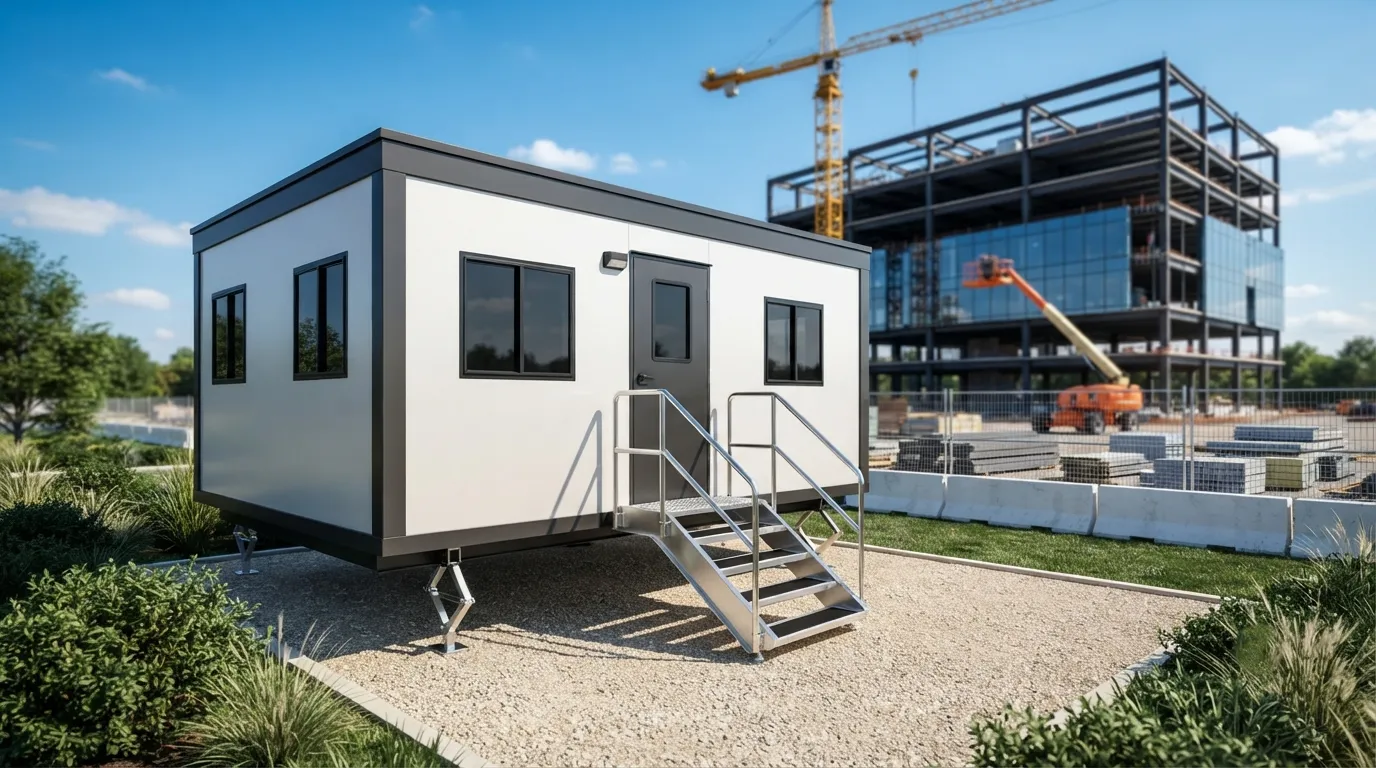
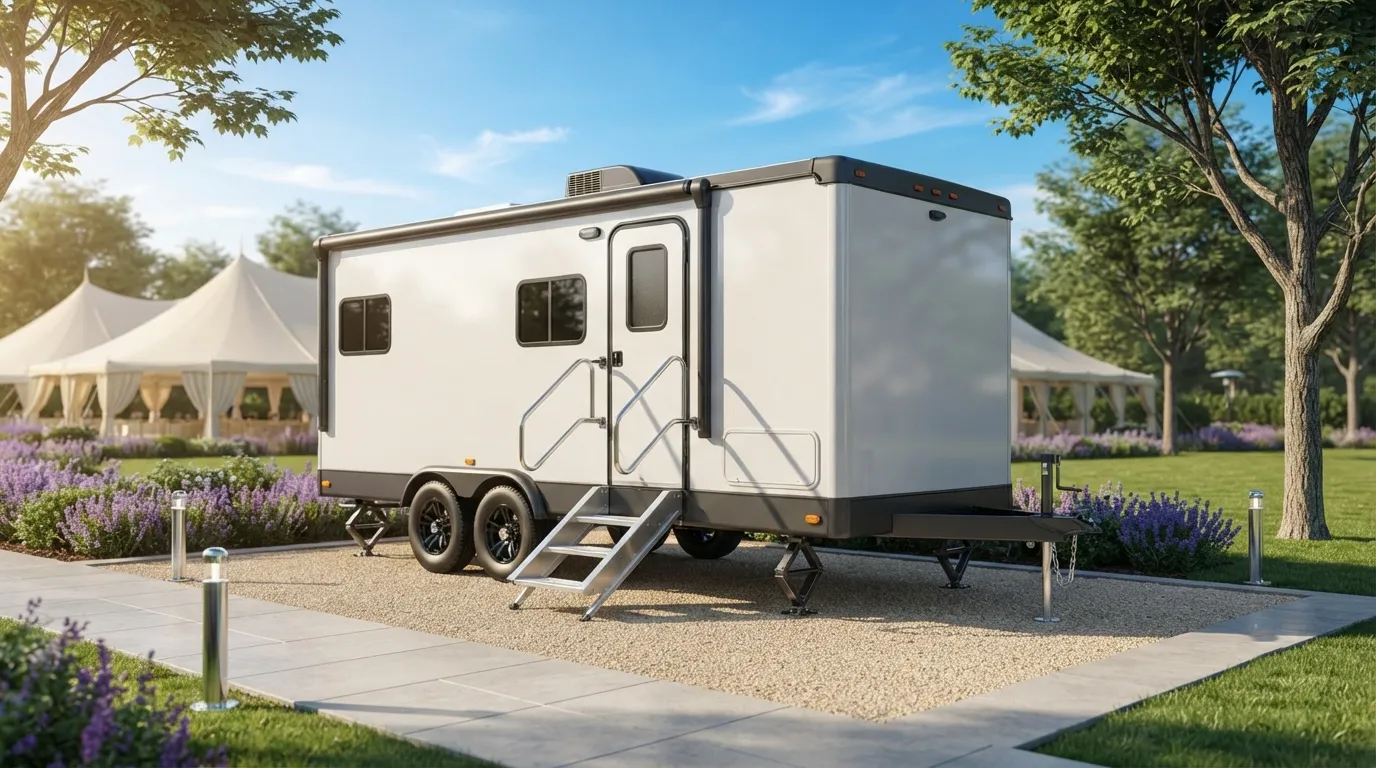
Standard units can freeze solid in a hard cold snap, but Seattle rarely produces one. When temperatures do drop, service crews add antifreeze-type deodorizer to the tank instead of water-based fluid, and increase pump-out frequency near intersections and building entries where ice forms first. A deluxe flushable porta potty with its own flush water needs more attention in cold snaps than a standard chemical unit, since supply lines can freeze if not insulated or drained between services. For events or crews needing a heated option, a restroom trailer rental with interior climate control is the safer call once temperatures threaten to stay below freezing for days. Seattle Porta Pros times winter service routes around forecasted lows rather than a fixed schedule, since a 39-degree week and a rare 28-degree week call for different tank chemistry. If you're staging a site with mixed needs, an 8 stall restroom trailer or 4 stall restroom trailer keeps flush plumbing indoors and out of the weather entirely.
Do You Need Hot Water In A Portable Sink During Winter?
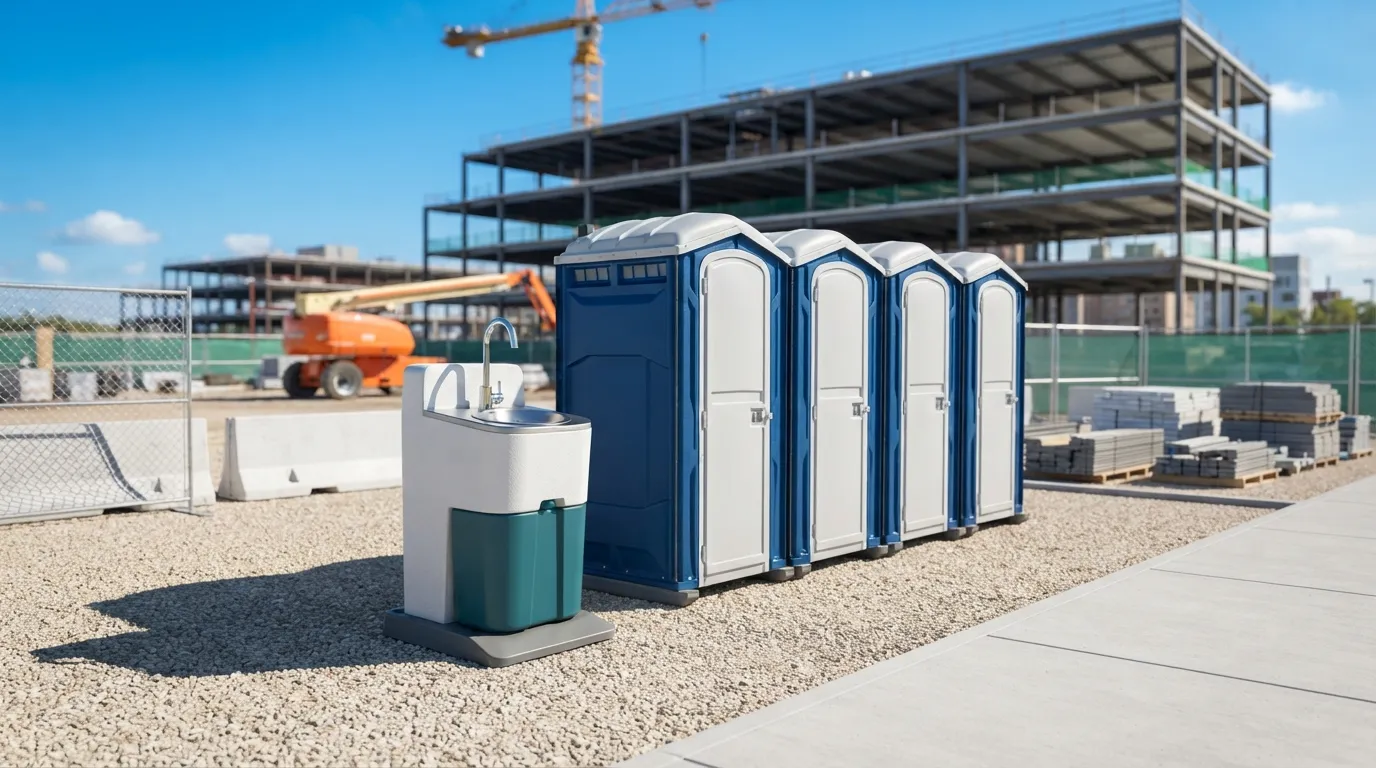
Hot water matters more in winter, and a self-contained portable sink with hot and cold water solves the problem without site plumbing. A portable sink rental or handwashing station rental built with a heated reservoir keeps hand-wash water usable even when ambient temps sit near freezing overnight. Under 29 CFR 1910.141(d)(2), washing facilities must be provided with soap and towels or a hand drying device, and hand sanitizer alone does not satisfy that requirement. That standard doesn't specify water temperature, but a hot and cold portable sink hand wash station keeps compliance easier when crews are outside for hours in Seattle's damp cold. If workers are applying paints, coatings or similar products this time of year, OSHA 1926.51(f)(1) requires washing facilities for that specific contaminant exposure. A hand sanitizer station rental is a fine supplement but never a substitute where that rule applies. Some winter storage or cold-chain jobs near Seattle also ask about a 20ft cold storage container: that's a refrigerated unit, distinct from a 20ft storage container or storage container rental used for dry goods, and worth specifying clearly when you request a quote.
What Permits Do You Need For Winter Placement In Seattle?
Nothing about winter changes Seattle's permit rules, but placement still needs sign-off before delivery. SDOT's Street Use permit covers storage containers and residential dumpsters placed in the public right-of-way, under Seattle Municipal Code 15.04.010, which makes it unlawful to use any public place without written permission from the Director of Transportation or other named authority. Containers must sit at least 30 feet from intersections, 10 feet from driveways and 15 feet from fire hydrants. Whether a portable toilet specifically falls under a named SDOT permit type isn't confirmed in SDOT's published categories, so placement in the right-of-way needs a direct check with the city before drop-off. Review porta potty permit requirements and dumpster permit requirements ahead of any winter job near a sidewalk or curb lane. If your site sits closer to Shoreline, 11.8 miles north, or Mercer Island, 8.9 miles southeast, local rules may differ, so confirm before scheduling.
Does cold weather change how often a porta potty gets serviced?
Yes, cold snaps can shift the schedule. ANSI/PSAI Z4.3 sets one service visit per week as the baseline for up to 10 users over a 40-hour week, but Seattle Porta Pros adjusts that around forecasted freezes to protect tank fluid and add antifreeze deodorizer as needed.
Can a porta potty freeze and crack?
The tank rarely cracks in Seattle's climate, since hard freezes are uncommon. With just 24.0 days a year at or below 32 F, most units stay serviceable all winter with standard chemical treatment and routine septic pumping service style pump-outs.
Is there a real risk from unmaintained units in freezing weather?
Neglected units carry real risk, which is part of why routine service matters everywhere, including here. Incidents involving unmaintained portable restrooms, including a reported death tied to a porta-potty in Winter Haven, Florida, underscore why consistent servicing and structural checks aren't optional, even in milder climates like Seattle's.
Do heated restroom trailers make sense for Seattle winters?
They make sense for events or long-term sites running through December and January. A restroom trailer rental or luxury restroom trailer with insulated plumbing avoids frozen lines entirely, which matters more for flush units than for standard chemical toilets.
Should handwashing stations get extra attention in winter?
Yes. Check OSHA 1926.51(a)(1), which requires an adequate supply of potable water at all workplaces, and confirm your unit's reservoir isn't freezing overnight. A heated portable sink solves this without daily refills.
Next step
Get a delivery date
Tell us the address, the dates and the headcount. We size the order and confirm the route.